
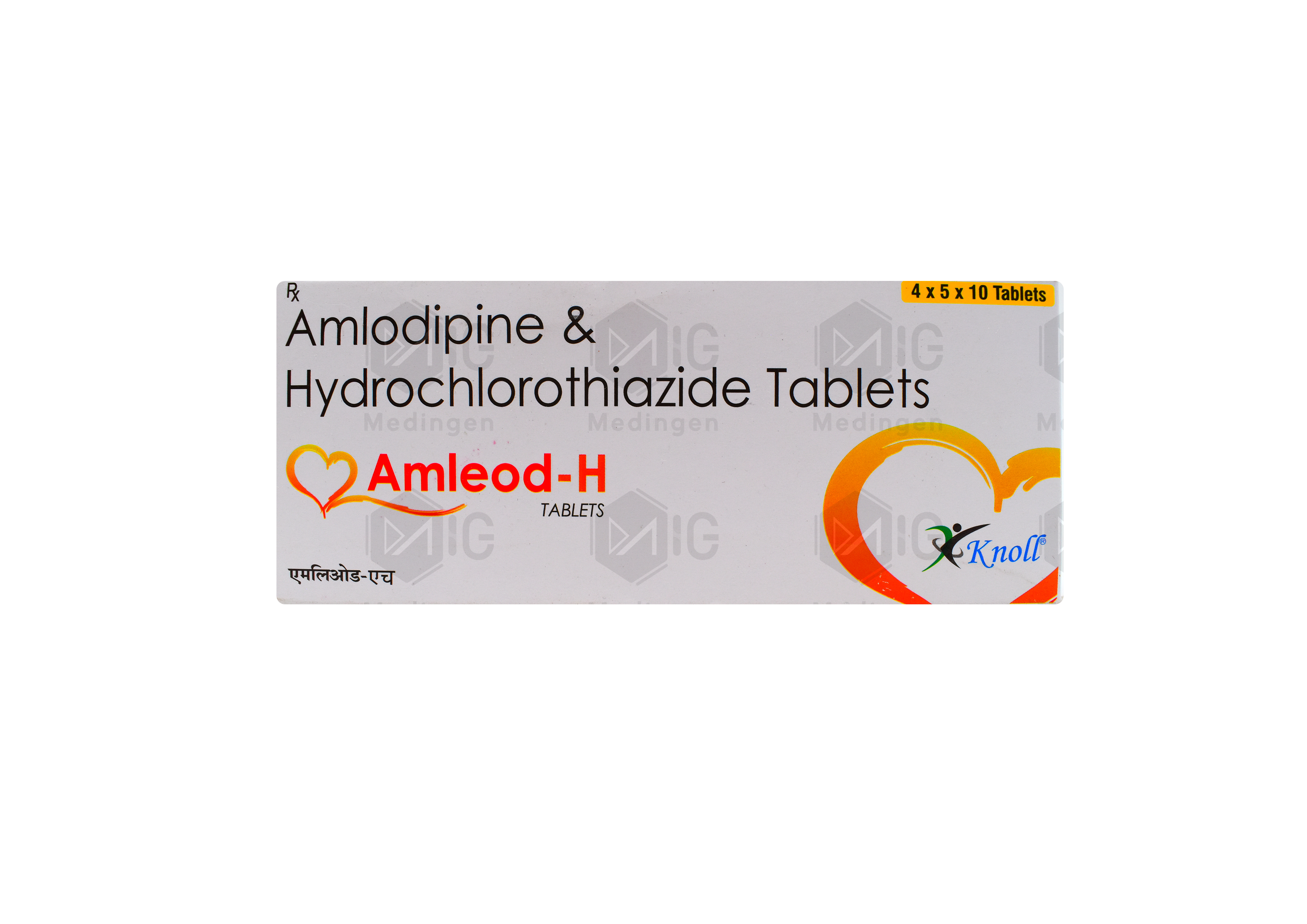
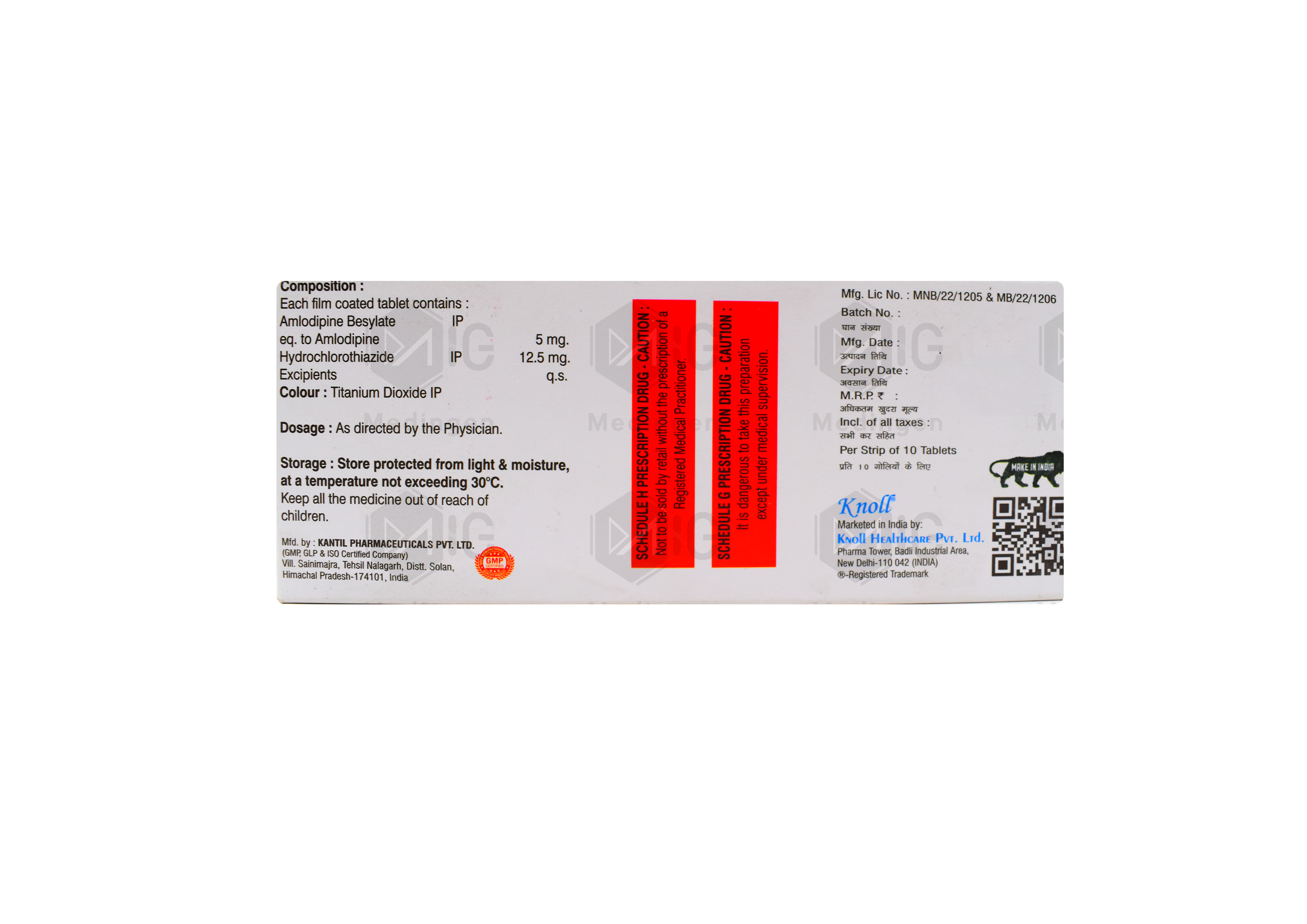
AMLEOD H
Product Description
AMLEOD H tablet contains AMLODIPINE + HYDROCHLOROTHIAZIDE, a prescription antihypertensive combination medicine used to treat high blood pressure (hypertension) when a single medicine alone does not provide adequate control. It combines a calcium channel blocker with a thiazide diuretic (water tablet). The amlodipine component relaxes and widens blood vessels, while the diuretic component helps remove excess salt and water through urine, together producing better blood pressure reduction. AMLEOD H tablet is commonly available in strengths such as 5 mg/12.5 mg and 5 mg/25 mg, with the exact dose adjusted according to blood pressure response, kidney status, and electrolyte levels. Regular use helps reduce the risk of stroke, heart attack, and kidney complications from uncontrolled hypertension.
Pharmacist Note
Take AMLEOD H tablet exactly as prescribed, preferably at the same time every day. Because it contains a diuretic, morning use is often preferred to reduce nighttime urination. Drink adequate water unless your doctor has advised fluid restriction, and keep follow-up blood pressure and potassium tests as scheduled.
Uses & Benefits
Used in the treatment of Hypertension (high blood pressure).
High Blood Pressure Control: [{product_name}] tablet is mainly used to control high blood pressure in patients who need stronger treatment than a single medicine. The dual action improves 24-hour blood pressure control and helps lower long-term cardiovascular risk.
Better Fluid & Salt Balance: The diuretic component in [{product_name}] tablet helps reduce excess fluid and sodium retention that can contribute to persistent high blood pressure. This may be especially helpful in salt-sensitive hypertension or mild fluid overload states.
Stroke & Heart Protection: Regular use of [{product_name}] tablet helps reduce strain on blood vessels and the heart over time. This lowers the risk of stroke, heart attack, and heart failure related to uncontrolled blood pressure.
Kidney Protection in Hypertension: [{product_name}] tablet helps maintain better long-term blood pressure control, which indirectly protects kidney function from damage caused by persistently elevated pressure. Periodic kidney and electrolyte monitoring remains important.
Side Effects
peripheral:
neurological:
metabolic:
gastrointestinal:
renal:
How to Use & Safety Advice
[{"icon":"dosage","title":"Dosage","description":"The usual [{product_name}] dosage is one tablet once daily, with the exact strength selected based on blood pressure readings and previous response to treatment. Your doctor may adjust the dose depending on swelling, potassium level, and kidney function."},{"icon":"timing","title":"Timing","description":"Take [{product_name}] tablet in the morning, with or without food, to avoid frequent nighttime urination. Taking it at the same time daily helps maintain steady blood pressure control."},{"icon":"limit","title":"Limit","description":"Do not exceed the prescribed [{product_name}] dosage because higher doses may increase the risk of dehydration, low potassium, severe dizziness, or low blood pressure. Never double the next dose if one is missed."},{"icon":"consistency","title":"Consistency","description":"Regular daily use of [{product_name}] tablet is important because it provides continuous blood pressure reduction throughout the day. Missing doses repeatedly may increase the risk of blood pressure spikes."}]
[{"icon": "pregnancy", "title": "Pregnancy", "description": "[{product_name}] tablet should only be used in pregnancy if clearly prescribed by a doctor. Blood pressure treatment during pregnancy needs careful maternal and fetal monitoring."}, {"icon": "alcohol", "title": "Alcohol", "description": "Alcohol may worsen dizziness and dehydration with [{product_name}] tablet. It is best to limit alcohol, especially during the first few days of treatment."}, {"icon": "driving", "title": "Driving", "description": "[{product_name}] tablet may cause dizziness, especially when standing up quickly or during the first week. Avoid driving until you know how it affects you."}, {"icon": "kidney", "title": "Kidney", "description": "Patients with kidney disease should use [{product_name}] tablet cautiously because the diuretic component may affect fluid and electrolyte balance. Kidney function and potassium tests may be required regularly."}, {"icon": "elderly", "title": "Elderly", "description": "Older adults may be more sensitive to dehydration, dizziness, falls, and low sodium or potassium with [{product_name}] tablet. Lower starting strengths and regular monitoring are usually preferred."}, {"icon": "children", "title": "Children", "description": "[{product_name}] tablet is generally not routinely used in children unless specifically prescribed by a pediatric specialist. Dose selection depends on age, weight, and blood pressure level."}]