
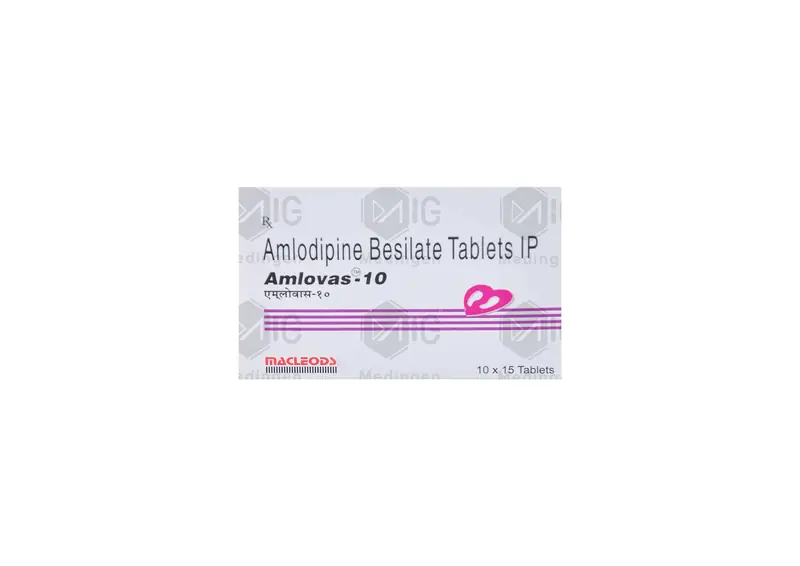
AMLOVAS 10MG
Product Description
AMLOVAS 10MG tablet contains AMLODIPINE, a dihydropyridine calcium channel blocker used to treat high blood pressure (hypertension), chronic stable angina, and certain coronary artery disease conditions. It works by relaxing and widening blood vessels, which improves blood flow and reduces the workload on the heart. AMLOVAS 10MG tablet is commonly available in strengths such as 2.5 mg, 5 mg, and 10 mg, with the exact dose based on blood pressure levels, age, and associated heart conditions. Regular use helps lower the risk of stroke, heart attack, and kidney damage linked to uncontrolled hypertension. It is usually taken once daily and is suitable for long-term blood pressure management under medical supervision.
Pharmacist Note
Take AMLOVAS 10MG tablet once daily at the same time each day, with or without food, to maintain steady blood pressure control. Do not stop it suddenly even if you feel well, because high blood pressure often has no symptoms. Mild ankle swelling can occur, so discuss persistent swelling or dizziness with your doctor.
Uses & Benefits
Used in the treatment of Angina (heart-related chest pain), Hypertension (high blood pressure), Arrhythmia, hypertensive emergency, subarachnoid haemorrhage and anal fissure.
High Blood Pressure Control: [{product_name}] tablet is mainly used to lower high blood pressure by relaxing the blood vessels. Better blood pressure control helps reduce the long-term risk of stroke, heart attack, kidney damage, and other cardiovascular complications.
Chronic Stable Angina Relief: [{product_name}] tablet helps improve blood flow to the heart muscle and reduces the frequency of chest pain episodes caused by reduced coronary blood supply. It is commonly used for long-term prevention of angina symptoms.
Coronary Artery Disease Support: [{product_name}] tablet may be used in patients with coronary artery disease to improve circulation and reduce hospitalization related to angina. It supports better heart workload balance during long-term therapy.
Vasospastic Angina Prevention: [{product_name}] tablet may also help prevent blood vessel spasms that cause variant or Prinzmetal angina. Regular use helps maintain smoother blood flow through coronary arteries.
Side Effects
vascular:
neurological:
peripheral:
cardiovascular:
gastrointestinal:
How to Use & Safety Advice
[{"icon":"dosage","title":"Dosage","description":"The usual [{product_name}] dosage for adults is 5 mg once daily, which may be increased to 10 mg once daily depending on blood pressure response. Elderly or frail patients may start with lower doses as advised by the doctor."},{"icon":"timing","title":"Timing","description":"Take [{product_name}] tablet at the same time every day, with or without food. Morning use is common, but any fixed daily schedule is acceptable if taken consistently."},{"icon":"limit","title":"Limit","description":"Do not exceed the prescribed [{product_name}] dosage because higher doses may increase the risk of severe swelling, dizziness, or low blood pressure. Never double the next dose if one is missed."},{"icon":"consistency","title":"Consistency","description":"Regular use of [{product_name}] tablet is important because it provides 24-hour blood pressure control. Missing doses repeatedly may reduce protection against heart and blood vessel complications."}]
[{"icon": "pregnancy", "title": "Pregnancy", "description": "[{product_name}] tablet should only be used in pregnancy if clearly prescribed by a doctor. Blood pressure control during pregnancy is important, so the benefits and risks should be assessed individually."}, {"icon": "alcohol", "title": "Alcohol", "description": "Alcohol may increase dizziness and further lower blood pressure when taken with [{product_name}] tablet. It is best to limit alcohol intake, especially when starting treatment."}, {"icon": "driving", "title": "Driving", "description": "[{product_name}] tablet may cause dizziness or light-headedness, especially in the first few days. Avoid driving or operating machinery until you know how it affects you."}, {"icon": "kidney", "title": "Kidney", "description": "[{product_name}] tablet is generally considered kidney-friendly and is often used in hypertension patients with kidney risk. However, blood pressure and kidney function should still be monitored regularly."}, {"icon": "elderly", "title": "Elderly", "description": "Older adults may be more sensitive to dizziness and blood pressure lowering effects of [{product_name}] tablet. Lower starting doses are often preferred for safety."}, {"icon": "children", "title": "Children", "description": "[{product_name}] tablet may be used in children above 6 years only if prescribed by a pediatrician. The dose depends on age, weight, and blood pressure levels."}]
Details
Benefits
Amlodipine is prescribed for managing conditions such as angina (chest pain linked to heart issues), high blood pressure (hypertension), arrhythmia, hypertensive crises, subarachnoid hemorrhage, and anal fissures.
How It Works
Amlodipine is a calcium channel blocker that relaxes blood vessels, improving blood flow and lowering blood pressure. By easing vessel tension, it reduces the heart’s workload and increases oxygen supply, helping to prevent heart-related chest pain.
Side Effects
Some common side effects of Amlodipine include headaches, nausea, abdominal pain, flushing (warmth in the face and upper body), dizziness, palpitations, swelling (edema), muscle cramps, changes in vision, shortness of breath, altered bowel habits, and feelings of weakness.
Expert's Advice
Amlodipine is effective in managing high blood pressure and reducing angina symptoms. Here are some key tips:
- Consistent Timing: Take Amlodipine at the same time every day to maintain stable blood levels and help remember your dose.
- Blood Pressure Monitoring: Amlodipine may initially cause a drop in blood pressure, so get up slowly from sitting or lying down to avoid dizziness.
- Managing Swelling: Swelling, especially in the ankles or feet, can occur. Elevate your legs when sitting, and inform your doctor if it persists.
- Dizziness Caution: Avoid driving or activities that require full alertness until you know how Amlodipine affects you, as it may cause dizziness.
- Limit Alcohol: Alcohol can increase side effects like dizziness, so consult your doctor before drinking.
- Pregnancy and Breastfeeding: Let your doctor know if you are pregnant, planning to become pregnant, or breastfeeding.
Frequently Asked Questions
Q. How long does it take for Amlodipine to take effect?
Amlodipine starts working the day it’s taken, but full benefits may take a few weeks to become apparent. Continue taking it as prescribed, even if there’s no immediate effect.
Q. Can Amlodipine cause itching?
Itching is a rare side effect of Amlodipine. If you experience severe itching, contact your doctor for advice.
Q. Does Amlodipine affect the kidneys?
No, Amlodipine is generally safe for the kidneys and may even offer protection by lowering blood pressure. It is safe to use for individuals with kidney conditions.
Q. Should Amlodipine be taken in the morning or at night?
Amlodipine can be taken at any time of day, but try to take it at the same time daily. Many prefer morning doses, but follow your doctor’s recommendation.
Q. Is Amlodipine a long-term medication?
You may need to take Amlodipine long-term or even for life, depending on your condition. Do not stop the medication without consulting your doctor, even if your blood pressure is controlled.
Q. Is Amlodipine the same as a beta-blocker?
No, Amlodipine is a calcium channel blocker, not a beta-blocker. It works by relaxing blood vessels rather than directly affecting heart rate.
Q. What are the serious side effects of Amlodipine?
Serious side effects are rare but may include liver issues (e.g., yellowing of the skin or nausea), pancreatitis (severe abdominal pain, nausea), or recurrent chest pain. Contact your doctor right away if you experience these symptoms.
Q. What should I avoid while taking Amlodipine?
Avoid grapefruit and grapefruit juice, as they can alter the medication’s levels in your body. Also, limit alcohol and avoid smoking, as these can affect blood pressure.
Q. I noticed ankle swelling after starting Amlodipine. What should I do?
Ankle swelling is a common side effect. Elevate your legs when resting, and consult your doctor if the swelling persists or worsens.