
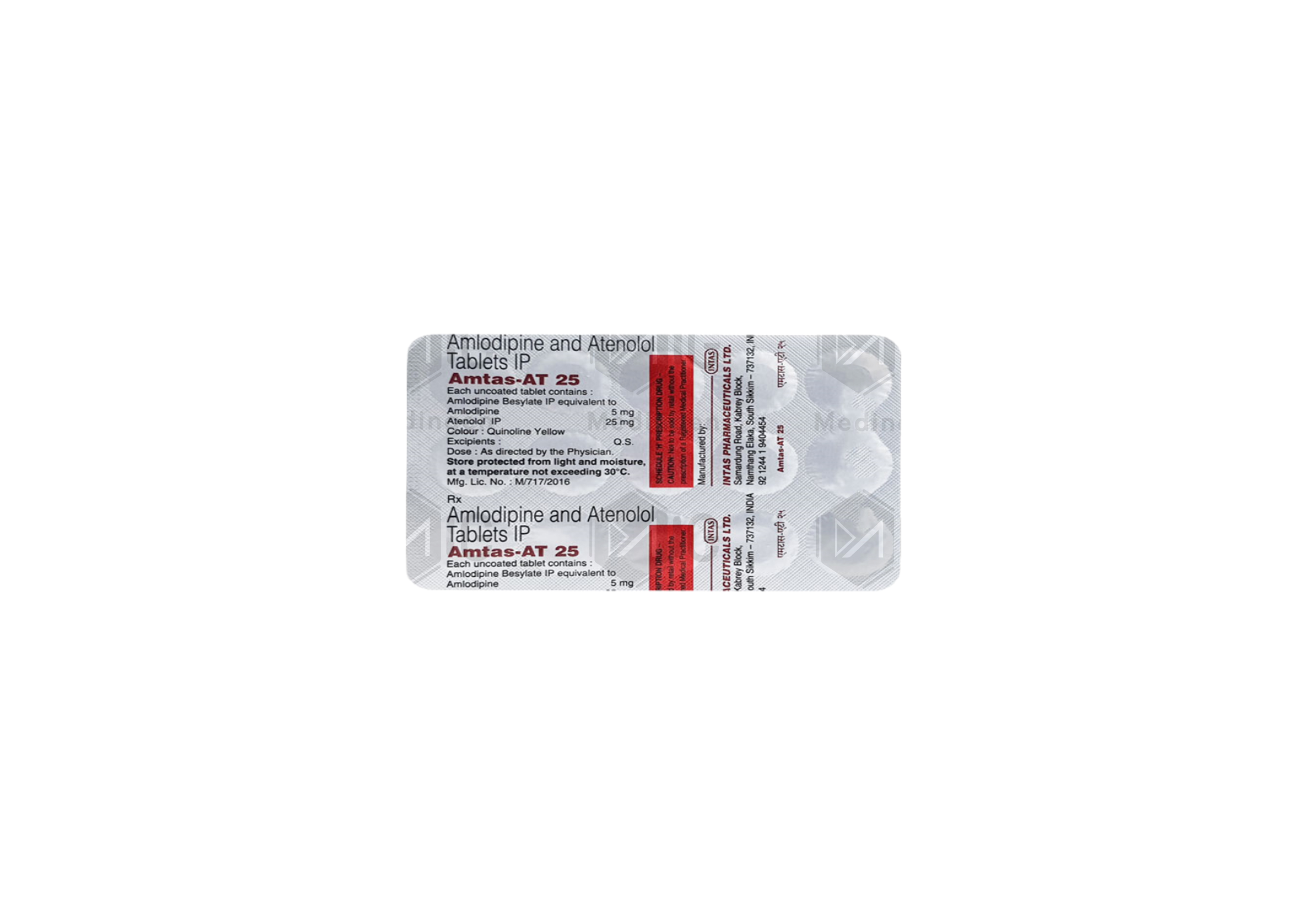
AMTAS AT 25MG
Product Description
AMTAS AT 25MG tablet contains AMLODIPINE + ATENOLOL, a prescription antihypertensive combination used to treat high blood pressure (hypertension) and angina (heart-related chest pain), especially when a single medicine alone does not provide adequate control. It combines a calcium channel blocker with a beta-blocker, helping relax blood vessels while also slowing the heart rate and reducing cardiac workload. AMTAS AT 25MG tablet is commonly available in strengths such as 5 mg/25 mg and 5 mg/50 mg, with dosing based on blood pressure response, pulse rate, and associated heart disease. Regular use helps reduce the long-term risk of stroke, heart attack, and worsening angina while providing smoother 24-hour cardiovascular protection.
Pharmacist Note
Take AMTAS AT 25MG tablet once daily at the same time every day, preferably after checking your blood pressure and pulse regularly as advised by your doctor. Do not stop it suddenly, as this may cause rebound high blood pressure, chest pain, or a fast heartbeat. Rise slowly from sitting or lying positions because dizziness can happen in the first few days.
Uses & Benefits
Used in the treatment of Hypertension (high blood pressure).
High Blood Pressure Control: [{product_name}] tablet is mainly prescribed for hypertension that needs stronger control than a single medicine can provide. The dual mechanism helps lower blood pressure more effectively and reduces the long-term risk of stroke, heart attack, and kidney damage.
Angina Prevention: [{product_name}] tablet helps reduce chest pain episodes by improving blood flow and decreasing the heart’s oxygen demand. This makes it useful in patients with chronic stable angina who also have high blood pressure.
Heart Rate & BP Stabilization: [{product_name}] tablet is useful in patients who have both elevated blood pressure and a faster pulse rate. By slowing the heartbeat and relaxing arteries, it provides balanced cardiovascular support throughout the day
Long-Term Cardiac Protection: Regular use of [{product_name}] tablet supports long-term heart protection by lowering vascular strain and reducing pressure-related complications. It may also help decrease hospitalization risk in selected heart patients.
Side Effects
peripheral:
neurological:
cardiovascular:
vascular:
gastrointestinal:
How to Use & Safety Advice
[{"icon":"dosage","title":"Dosage","description":"The usual [{product_name}] dosage is one tablet once daily, with the exact strength selected based on blood pressure, pulse rate, and response to previous medicines. Doctors may start with a lower beta-blocker strength in elderly or low-pulse patients."},{"icon":"timing","title":"Timing","description":"Take [{product_name}] tablet at the same time each day, with or without food. Morning use is common, but any fixed daily schedule is acceptable if followed consistently."},{"icon":"limit","title":"Limit","description":"Do not exceed the prescribed [{product_name}] dosage because higher doses may cause severe dizziness, excessive slowing of the heart rate, fatigue, or very low blood pressure. Never double the next dose if one is missed."},{"icon":"consistency","title":"Consistency","description":"Regular daily timing is important because [{product_name}] tablet provides round-the-clock blood pressure and heart rate control. Missing doses repeatedly may increase the risk of BP spikes or angina recurrence."}]
[{"icon": "pregnancy", "title": "Pregnancy", "description": "[{product_name}] tablet should only be used in pregnancy if clearly prescribed by a doctor. Blood pressure medicines in pregnancy require careful fetal and maternal monitoring."}, {"icon": "alcohol", "title": "Alcohol", "description": "Alcohol may worsen dizziness and increase the blood pressure-lowering effect of [{product_name}] tablet. It is best to limit or avoid alcohol, especially during the initial days of treatment."}, {"icon": "driving", "title": "Driving", "description": "[{product_name}] tablet may cause dizziness, tiredness, or slower reactions, especially when starting treatment. Avoid driving until you know how your body responds."}, {"icon": "kidney", "title": "Kidney", "description": "[{product_name}] tablet may require careful monitoring in patients with kidney disease, especially because the beta-blocker component can accumulate in reduced kidney function. Periodic kidney tests and pulse checks may be advised."}, {"icon": "elderly", "title": "Elderly", "description": "Older adults may be more sensitive to slow pulse, dizziness, falls, and swelling with [{product_name}] tablet. Lower starting strengths are usually preferred for safety."}, {"icon": "children", "title": "Children", "description": "[{product_name}] tablet is generally not routinely used in children unless specifically prescribed by a pediatric cardiologist. Dose selection depends on age, weight, and condition."}]
Details
Benefits
Amlodipine + Atenolol is primarily used to treat hypertension (high blood pressure), helping to reduce the risk of heart attacks and strokes.
How It Works
This combination contains:Amlodipine: A calcium channel blocker that relaxes and widens blood vessels, allowing blood to flow more easily.Atenolol: A beta-blocker that lowers the heart rate and blood pressure, reducing the heart’s workload.
Side Effects
Headache, Palpitations, Edema (swelling)
Expert's Advice
- Dizziness Precaution: Stand up slowly from sitting or lying positions to reduce dizziness.
- Do Not Stop Abruptly: Avoid discontinuing the medication without consulting your doctor, as it may cause a sudden increase in blood pressure.
- Pregnancy and Breastfeeding: Inform your doctor if you are pregnant, planning to conceive, or breastfeeding.
Frequently Asked Questions
Q.What lifestyle changes should be made while using Amlodipine + Atenolol?
Alongside taking Amlodipine + Atenolol, lifestyle changes like avoiding smoking, maintaining a balanced diet, exercising regularly, and managing weight can improve heart health.
Q.Can I stop taking Amlodipine + Atenolol if I feel well?
No, continue as prescribed by your doctor. Stopping suddenly can lead to serious issues like heart attack and stroke.
Q.Can Amlodipine + Atenolol cause dizziness?
Yes, dizziness is possible, particularly when starting the medication. Rise slowly from sitting or lying positions to minimize this effect.
Q.Are there specific storage and disposal instructions for Amlodipine + Atenolol?
Store the medication as directed on the packaging and keep it out of reach of children, pets, and others.
Q.What are the contraindications for Amlodipine + Atenolol?
This combination may not be suitable for people allergic to Amlodipine, Atenolol, or any other ingredient in the medication. It is also contraindicated for patients with asthma, lung disease, or certain heart conditions. Share your medical history with your doctor.
Q.Can Amlodipine + Atenolol cause headaches?
Yes, headaches are possible, especially in the initial stages of treatment. These usually improve after the first week; consult your doctor if they persist or worsen.