
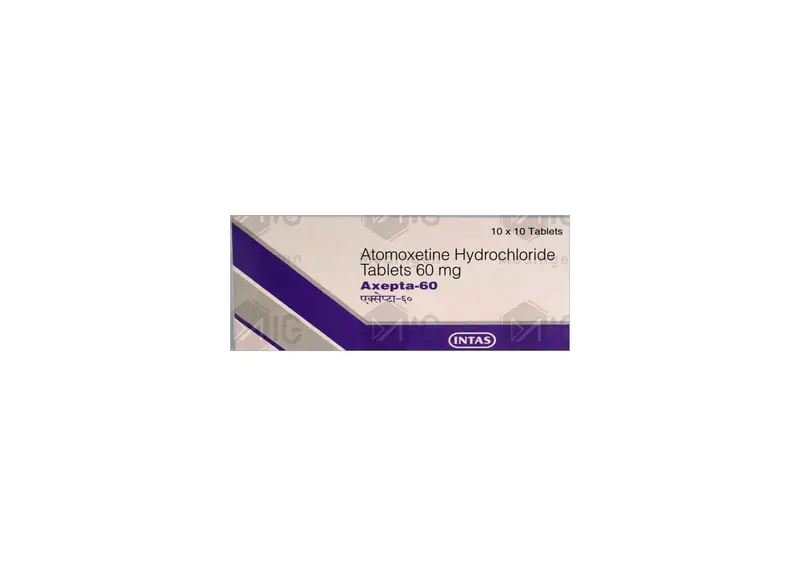
AXEPTA 60MG
Product Description
AXEPTA 60MG tablet contains ATOMOXETINE, a selective norepinephrine reuptake inhibitor (non-stimulant ADHD medicine) used to treat attention-deficit hyperactivity disorder (ADHD) in children above 6 years, adolescents, and adults. It helps improve attention span, focus, impulse control, hyperactivity, emotional regulation, and task completion without the abuse potential associated with stimulant medicines. AXEPTA 60MG tablet is commonly prescribed when stimulant therapy is unsuitable, poorly tolerated, or when coexisting anxiety symptoms are present. It is usually available in 10 mg, 18 mg, 25 mg, 40 mg, 60 mg, 80 mg, and 100 mg strengths, with the exact AXEPTA 60MG dosage based on age, body weight, and treatment response. Regular use helps improve academic, workplace, and social functioning over time.
Pharmacist Note
Take AXEPTA 60MG tablet once daily in the morning or in two divided doses, exactly at the same time each day. Swallow the capsule whole and do not open, crush, or chew it, because the powder may irritate the eyes and skin. Improvement may begin in 1–2 weeks, but the full benefit may take up to 4 weeks or longer.
Uses & Benefits
Used in the treatment of attention deficit hyperactivity disorder (ADHD).
ADHD Symptom Control: [{product_name}] tablet helps improve concentration, reduce distractibility, and control impulsive behavior in children and adults with ADHD. It is especially helpful for people who need all-day symptom coverage without stimulant effects.
Hyperactivity & Emotional Regulation: [{product_name}] tablet may reduce restlessness, fidgeting, and emotional outbursts linked with ADHD. Better control over impulses can improve school performance, work productivity, and social interactions.
Non-Stimulant Alternative: [{product_name}] tablet is commonly chosen when stimulant medicines are not suitable, cause side effects, or are avoided because of misuse concerns. It offers a lower abuse risk while still supporting ADHD symptom improvement.
ADHD with Anxiety Features: [{product_name}] tablet may be useful in patients whose ADHD symptoms coexist with anxiety, excessive worry, or sleep disruption. Its non-stimulant action can make it easier to tolerate in such cases.
Side Effects
gastrointestinal:
neurological:
appetite:
cardiovascular:
serious:
How to Use & Safety Advice
[{"icon":"dosage","title":"Dosage","description":"The usual [{product_name}] dosage starts low and is gradually increased based on body weight and response. Adults commonly start at 40 mg once daily, while children may receive weight-based dosing under specialist supervision."},{"icon":"timing","title":"Timing","description":"Take [{product_name}] tablet in the morning, with or without food. If stomach upset occurs, taking it after breakfast may improve tolerance."},{"icon":"limit","title":"Limit","description":"Do not exceed the prescribed [{product_name}] dosage because higher doses may increase side effects such as rapid heartbeat, blood pressure rise, or mood changes."},{"icon":"consistency","title":"Consistency","description":"Regular daily use of [{product_name}] tablet is important because ADHD symptom improvement builds gradually over days to weeks. Skipping doses may delay noticeable benefit."}]
[{"icon": "pregnancy", "title": "Pregnancy", "description": "[{product_name}] tablet works by selectively blocking the reuptake of norepinephrine in the brain, which increases the availability of this chemical messenger in areas responsible for attention, impulse control, and executive function. This improves focus, reduces hyperactivity, and supports better behavioral regulation. Unlike stimulant medicines, it works without directly increasing dopamine in reward pathways, giving it a lower misuse potential."}, {"icon": "alcohol", "title": "Alcohol", "description": "Alcohol may worsen dizziness, drowsiness, or concentration problems while using [{product_name}] tablet. It is best limited or avoided."}, {"icon": "driving", "title": "Driving", "description": "Alcohol may worsen dizziness, drowsiness, or concentration problems while using [{product_name}] tablet. It is best limited or avoided."}, {"icon": "kidney", "title": "Kidney", "description": "[{product_name}] tablet is generally safe in kidney disease, but overall dose planning should still follow medical advice if multiple health issues are present."}, {"icon": "elderly", "title": "Elderly", "description": "[{product_name}] tablet is not commonly used in the elderly, but when prescribed, lower starting doses and careful blood pressure monitoring are advisable."}, {"icon": "children", "title": "Children", "description": "[{product_name}] tablet is approved for children above 6 years with ADHD under specialist guidance. Growth, appetite, mood, and blood pressure should be monitored regularly."}]
Details
Benefits
Atomoxetine is prescribed to help manage Attention Deficit Hyperactivity Disorder (ADHD). It aids in improving attention, and helps reduce impulsive behavior and hyperactivity in individuals with ADHD.
How It Works
Atomoxetine is a non-stimulant medication that works by adjusting certain brain chemicals involved in focus and impulse control, which can help individuals with ADHD to concentrate and stay calm.
Side Effects
Commonly reported side effects include: Headache,Nausea, Vomiting, Sleepiness, Reduced appetite, Abdominal pain, Increased heart rate, Elevated blood pressure
Expert's Advice
To ensure effective treatment with Atomoxetine, keep in mind these important points:
- Consistency: Take Atomoxetine at the same time each day to maintain stable levels in your system.
- Heart Monitoring: Your doctor may periodically check your heart rate and blood pressure during treatment.
- Avoid Activities Requiring Alertness: Until you know how Atomoxetine affects you, avoid driving or operating machinery, as it may cause dizziness or drowsiness.
- Mood Monitoring: Report any unusual changes in mood, behavior, or thoughts of self-harm to your doctor.
- Do Not Stop Abruptly: Avoid discontinuing Atomoxetine without consulting your doctor, as stopping suddenly may worsen symptoms.
Frequently Asked Questions
Q. How long does Atomoxetine take to start working?
It can take a few weeks to experience the full benefits of Atomoxetine, though some initial improvement may be noticeable earlier. Regular use is necessary for optimal effect.
Q. Does Atomoxetine affect appetite or weight?
Yes, Atomoxetine may reduce appetite, which could lead to weight loss. Let your doctor know if you notice significant changes in appetite or weight.
Q. Is Atomoxetine habit-forming?
No, Atomoxetine is not considered habit-forming and is less likely to be misused than stimulant ADHD medications.
Q. Can I take Atomoxetine with food?
Yes, you can take Atomoxetine with or without food. Taking it with food may help minimize stomach discomfort.
Q. What should I do if I miss a dose?
If you miss a dose, take it as soon as you remember unless it’s nearly time for your next dose. Do not double up to make up for a missed dose.
Q. Can Atomoxetine be used with other ADHD medications?
Atomoxetine is typically prescribed alone but may be combined with other medications under your doctor’s guidance. Always consult your doctor before combining treatments.
Q. Should people with heart issues take special precautions with Atomoxetine?
Yes, Atomoxetine can affect heart rate and blood pressure. If you have a history of heart disease, high blood pressure, or any cardiovascular condition, inform your doctor before starting treatment.
Q. Is Atomoxetine safe for children?
Atomoxetine is approved for children six years and older but should be used only under medical supervision, with regular monitoring of growth, weight, and behavioral changes.
Q. What should I avoid while taking Atomoxetine?
Avoid alcohol, as it may worsen side effects like drowsiness. Also, consult your doctor before using any over-the-counter medications or supplements alongside Atomoxetine.