
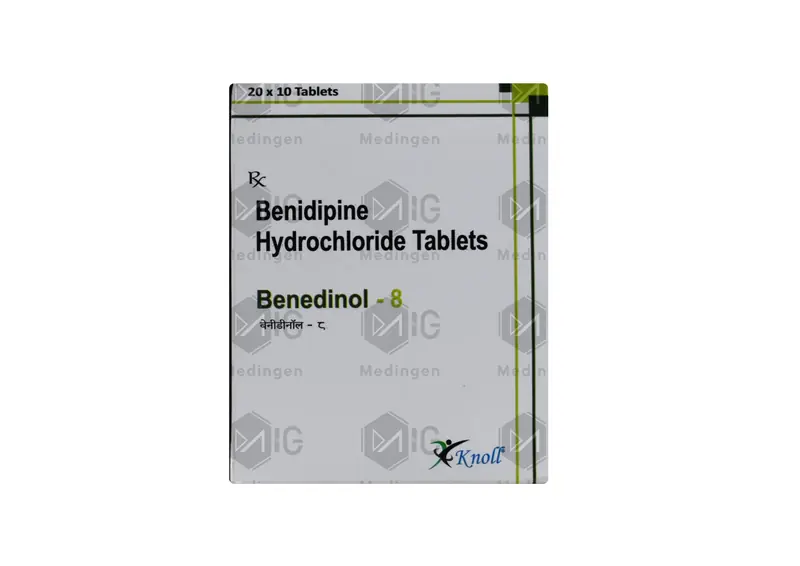

BENEDINOL 8MG
Uses & Benefits
Used To treat hypertension (high blood pressure) and Angina (heart-related chest pain).
Details
Benefits
Hypertension (high blood pressure), Angina (chest pain due to reduced blood flow to the heart), Arrhythmia (irregular heartbeats), Hypertensive emergencies, Subarachnoid hemorrhage (bleeding in the area between the brain and its thin coverings), Anal fissures
How It Works
Benidipine is a calcium channel blocker that:
- Relaxes and widens blood vessels, reducing the pressure exerted on them.
- Enhances blood flow and improves oxygen delivery throughout the body.
- Helps prevent chest pain (angina) and regulates blood pressure effectively.
Side Effects
Fatigue, Ankle swellingDrowsiness or sleepines, Flushing (warmth or redness in the face, neck, or chest), Headache, Dizziness, Palpitations (feeling of a racing or irregular heartbeat), Nausea, Edema (fluid retention leading to swelling), Abdominal discomfort or pain.
Expert's Advice
- Consistency: Take Benidipine at the same time each day to maintain stable blood levels.
- Managing Dizziness: To avoid dizziness, rise slowly when standing up from sitting or lying positions.
- Swelling Relief: If you experience ankle swelling, elevate your legs, and consult your doctor if the swelling persists.
- Caution with Activities: Avoid driving or operating heavy machinery if the medication makes you feel dizzy or sleepy.
- Pregnancy and Breastfeeding: Inform your doctor if you are pregnant, planning to conceive, or breastfeeding.
- Lifestyle Modifications: Follow a low-sodium and low-fat diet and adhere to any lifestyle changes recommended by your doctor.
- Grapefruit Warning: Avoid consuming grapefruit or grapefruit juice, as it can interact with the medication and affect its efficacy.
Frequently Asked Questions
Q. What is Benidipine used for?
Benidipine is primarily used to treat high blood pressure and angina. It relaxes blood vessels, lowers blood pressure, and enhances oxygen delivery to the heart.
Q. What are the common side effects of Benidipine?
Common side effects include headache, dizziness, fatigue, ankle swelling, nausea, palpitations, and abdominal pain. If severe or persistent side effects occur, contact your doctor.
Q. Is Benidipine suitable for patients with kidney impairment?
Yes, Benidipine may have protective effects on the kidneys, reducing damage and protein leakage, particularly in patients with diabetes and hypertension.
Q. Should I take Benidipine in the morning or at night?
Benidipine can be taken at any time, morning or evening, as directed by your doctor. To ensure consistency, take it at the same time every day.
Q. How long do I need to take Benidipine?
Benidipine may need to be taken lifelong for managing blood pressure or preventing angina. Continue taking it as prescribed, even if you feel well, to maintain control over your condition.
Q. What dietary adjustments should I follow while on Benidipine?
Stick to a low-sodium and low-fat diet. Avoid grapefruit and its juice, as they can interfere with the medication's effectiveness. Follow all dietary recommendations from your doctor.
Q. What should I do if I miss a dose of Benidipine?
Take the missed dose as soon as you remember. If it is close to your next scheduled dose, skip the missed one and continue your regular dosing routine. Do not double up on doses.