
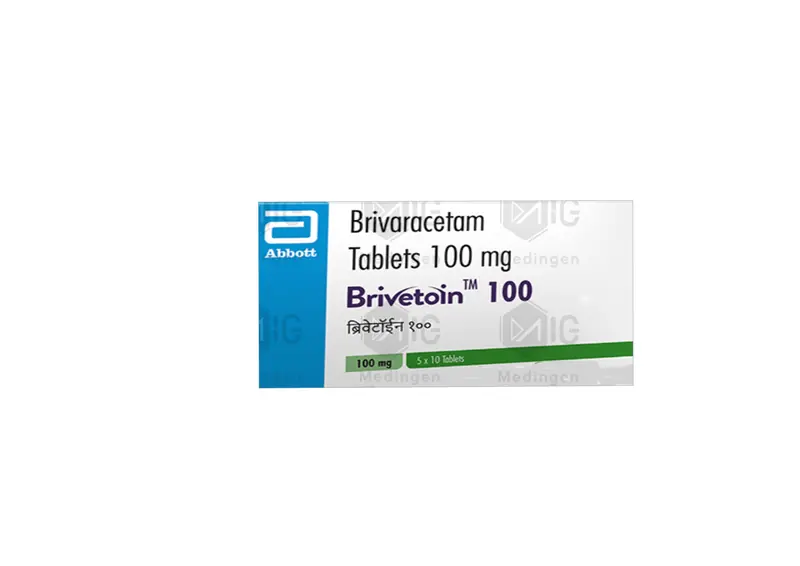
BRIVETOIN 100MG
Uses & Benefits
Used in the treatment of epilepsy and epilepsy/seizures.
Details
Benefits
Brivaracetam is prescribed to manage epilepsy and prevent seizures in individuals with this condition.
How It Works
Brivaracetam functions as an antiepileptic by binding to specific proteins (SV2A) on nerve cells, which helps reduce abnormal electrical activity in the brain and prevents the spread of seizure-inducing signals.
Side Effects
Dizziness,Drowsiness,Sedation,Neuropsychiatric symptoms (such as mood changes)
Expert's Advice
- Take Brivaracetam exactly as prescribed, as missed doses may increase seizure risk.
- Stick to the same brand to maintain consistent efficacy.
- Follow lifestyle practices to help prevent seizures, such as eating a balanced diet, exercising regularly, practicing relaxation techniques, getting adequate sleep, and limiting screen time.
- Avoid driving or operating machinery if you experience drowsiness or dizziness.
- Inform your doctor about any history of liver disease, kidney issues, or substance abuse.
- Do not stop Brivaracetam abruptly, as this may lead to seizure recurrence. Always consult your doctor if adjustments are needed.
Frequently Asked Questions
Q.Can I crush Brivaracetam tablets?
No, swallow Brivaracetam tablets whole with water. Avoid crushing or splitting them. Take with or without food at the same time each day.
Q.What if I miss a dose?
Take the missed dose as soon as you remember. If it close to the next dose, skip the missed one. Never double up on doses.
Q.Can I stop taking Brivaracetam if I feel better?
No, discontinuing Brivaracetam suddenly may trigger continuous seizures. Consult your doctor for a safe tapering plan if needed.
Q.What should I avoid while taking Brivaracetam?
Avoid activities that require alertness, such as driving, until you understand how Brivaracetam affects you. Also, avoid alcohol, which may exacerbate concentration and memory issues.
Q.What if I accidentally take more than the recommended dose?
Taking an overdose may cause dizziness, fatigue, nausea, blurred vision, anxiety, or a slow heartbeat. Seek immediate medical help if these symptoms occur.
Q.How can I monitor for early signs of suicidal thoughts?
Be mindful of sudden mood or behavior changes. Watch for signs like withdrawal, depression, or unusual preoccupation with death, and maintain regular doctor follow-ups to address any concerns.