
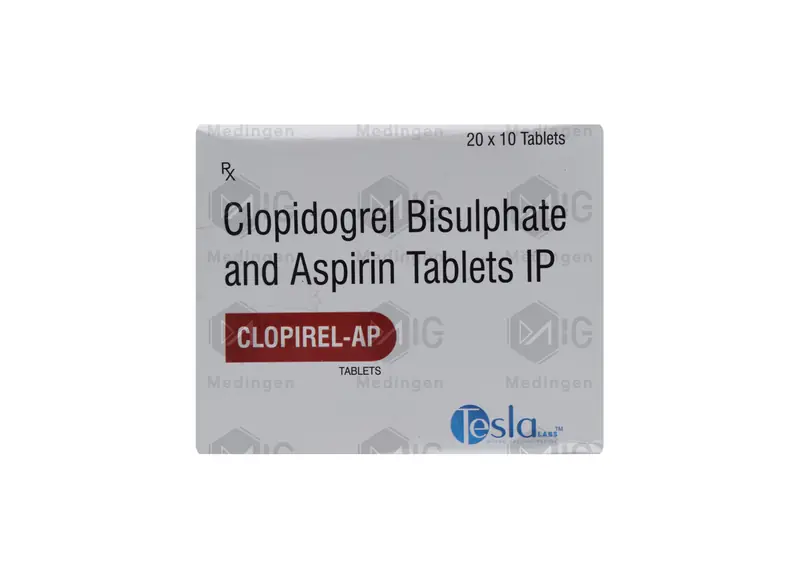

CLOPIREL AP
Product Description
CLOPIREL AP tablet contains ASPIRIN + CLOPIDOGREL, a dual antiplatelet combination used to prevent harmful blood clots in the heart and brain circulation. It is commonly prescribed after heart attack, unstable angina, coronary stent placement, ischemic stroke, transient ischemic attack (TIA), and selected peripheral artery disease cases. The aspirin component blocks thromboxane-mediated platelet activation, while clopidogrel inhibits the P2Y12 receptor, together giving stronger clot prevention than either medicine alone. CLOPIREL AP tablet is commonly available in strengths such as 75 mg/75 mg and 150 mg/75 mg, with the exact CLOPIREL AP dosage decided by the cardiologist or neurologist based on clotting and bleeding risk. Regular use significantly lowers the risk of repeat heart attack, stent blockage, and stroke recurrence.
Pharmacist Note
Take CLOPIREL AP tablet after food at the same time every day to reduce stomach irritation and maintain steady antiplatelet protection. Do not stop it suddenly, especially after angioplasty or stent placement, because this can sharply increase the risk of a life-threatening clot. Inform your doctor or dentist before surgery, dental extraction, spinal injection, or any invasive procedure.
Uses & Benefits
Used to prevent prevention of heart attack and stroke.
Post-Heart Attack Protection: [{product_name}] tablet is widely used after a heart attack or unstable angina to reduce the risk of another cardiac event. The dual antiplatelet action helps prevent fresh clot formation inside narrowed coronary arteries.
After Coronary Stent Placement: [{product_name}] tablet is commonly prescribed after angioplasty and stent insertion to prevent stent thrombosis, a dangerous clot that can suddenly block the stent. This significantly improves long-term stent patency and heart protection.
Stroke & TIA Prevention: [{product_name}] tablet may be used after ischemic stroke or transient ischemic attack in selected patients at high risk of recurrence. It helps lower platelet aggregation in cerebral blood vessels and reduces repeat stroke risk.
Peripheral Artery Disease Support: [{product_name}] tablet may also be used in certain patients with poor blood flow to the legs or vascular disease. It helps reduce clot-related complications and improves vascular protection.
Side Effects
bleeding:
gastrointestinal:
serious_gi:
skin:
serious:
How to Use & Safety Advice
[{"icon":"dosage","title":"Dosage","description":"The usual [{product_name}] dosage is one tablet once daily, most commonly aspirin 75 mg + clopidogrel 75 mg, exactly as prescribed by the cardiologist. The treatment duration may range from a few weeks to 12 months or longer, especially after stent placement."},{"icon":"timing","title":"Timing","description":"Take [{product_name}] tablet after meals, preferably after breakfast, at the same time every day. Consistent timing helps maintain reliable platelet inhibition."},{"icon":"limit","title":"Limit","description":"Do not exceed the prescribed [{product_name}] dosage and do not add extra aspirin, ibuprofen, or painkillers without doctor advice. Doing so can greatly increase bleeding risk."},{"icon":"consistency","title":"Consistency","description":"Regular daily use of [{product_name}] tablet is critical because missing doses can quickly reduce protection against heart attack, stroke, or stent clotting. Refill the medicine before it runs out."}]
[{"icon": "pregnancy", "title": "Pregnancy", "description": "[{product_name}] tablet should only be used in pregnancy if specifically prescribed by a specialist. The bleeding risk for mother and baby must be carefully assessed."}, {"icon": "alcohol", "title": "Alcohol", "description": "Alcohol can significantly increase stomach irritation and bleeding risk with [{product_name}] tablet. It is best avoided or kept to a minimum."}, {"icon": "driving", "title": "Driving", "description": "[{product_name}] tablet usually does not directly affect alertness. However, dizziness or weakness related to bleeding or anemia may impair driving."}, {"icon": "kidney", "title": "Kidney", "description": "Patients with kidney disease should use [{product_name}] tablet cautiously because bleeding complications may be harder to manage. Kidney function review is advisable in long-term use."}, {"icon": "elderly", "title": "Elderly", "description": "Older adults often benefit from [{product_name}] tablet after vascular events, but they also have a higher bleeding risk. Dose duration and stomach protection may need closer monitoring."}, {"icon": "children", "title": "Children", "description": "[{product_name}] tablet is not routinely used in children unless prescribed by a specialist for rare vascular indications."}]
Details
Benefits
Aspirin + Clopidogrel is used to reduce the risk of heart attack and stroke in people at high risk due to heart disease or blood vessel disorders. It is commonly prescribed after heart attacks, stent insertion, or coronary artery bypass surgery to prevent further blood clots.
How It Works
Aspirin + Clopidogrel is a combination of two antiplatelet drugs. Aspirin and Clopidogrel work by preventing platelets from sticking together and forming blood clots. This decreases the risk of a heart attack or stroke by ensuring smoother blood flow.
Side Effects
Abdominal pain, Bruising, Diarrhea, Gastrointestinal bleeding, Increased bleeding tendency, Nosebleeds, Indigestion, Stomach inflammation, Nausea, Vomiting, Constipation, Flatulence
Expert's Advice
- Take with Food: Helps reduce stomach upset.
- Exercise Caution: Be careful when using sharp objects or engaging in activities that could cause injury, as this combination increases bleeding risk.
- Before Surgery: Inform your doctor if you are scheduled for surgery or dental work, as you may need to pause the medication temporarily.
Frequently Asked Questions
Q. Why have I been prescribed Aspirin + Clopidogrel?
This combination is often prescribed after a heart attack, stent placement, or coronary artery bypass surgery to help prevent blood clots and reduce the risk of another cardiovascular event.
Q. Is Aspirin + Clopidogrel a blood thinner?
Yes, both Aspirin and Clopidogrel act as blood thinners by preventing platelets from clumping, thereby lowering the risk of blood clots.
Q. Can I drink alcohol while taking Aspirin + Clopidogrel?
Avoid alcohol while taking this medication, as it can increase the risk of stomach bleeding. Symptoms of stomach bleeding include vomiting blood or black stools.
Q. Do I need to stop Aspirin + Clopidogrel before surgery?
Yes, you may need to stop this combination a few days before surgery to reduce the risk of excessive bleeding. Consult your doctor before making any changes to your medication.
Q. What is the most important information about Aspirin + Clopidogrel?
This medication increases bleeding risk, even with minor injuries. Be aware of signs like black stools or blood in urine, and seek immediate medical attention if you notice symptoms of a stroke, such as numbness, weakness, confusion, or slurred speech.
Q. Who should not take Aspirin + Clopidogrel?
People with severe liver disease, active stomach ulcers, brain bleeding, hemophilia, or those who are pregnant or breastfeeding should avoid this combination. Discuss any health conditions with your doctor before starting.
Q. What if I miss a dose of Aspirin + Clopidogrel?
If you miss a dose, take it as soon as you remember. If your next dose is near, skip the missed dose and continue as scheduled. Avoid doubling up on doses.
Q. How long should I take Aspirin + Clopidogrel after stent insertion?
Typically, you should take it for at least one year. The duration may vary depending on your condition, so follow your doctor’s guidance and do not stop without consulting them.
Q. What should I avoid while taking Aspirin + Clopidogrel?
Avoid high-risk activities that could cause bleeding, like contact sports. Limit or avoid painkillers such as ibuprofen unless approved by your doctor, as they may increase bleeding risk. Avoid excessive alcohol.