
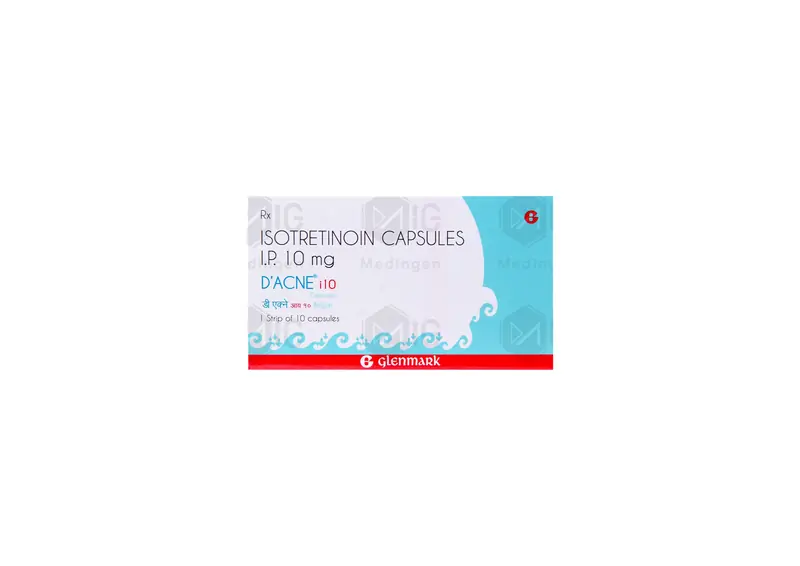
D ACNE I 10MG
Uses & Benefits
Used to treat severe, disfiguring nodular acne.
Details
Benefits
Isotretinoin is primarily used to treat severe nodular acne that has not responded to other treatments.
How It Works
Isotretinoin is a derivative of vitamin A that targets sebaceous (oil) glands, significantly reducing sebum production and thus lowering acne-causing bacteria. It also possesses anti-inflammatory properties, which help reduce redness and swelling in acne-affected areas.
Side Effects
Dry skin, eyes, and lips, Dermatitis, Nosebleeds, Back and joint pain, Headache, Nasopharyngitis (throat and nasal passage inflammation), Elevated creatine phosphokinase levels, Lip inflammation (cheilitis), Reduced night vision
Expert's Advice
- Take Isotretinoin with food to improve absorption.
- Use sunscreen and wear protective clothing, as Isotretinoin increases skin sensitivity to sunlight.
- Avoid facial waxing and laser treatments, as they may cause skin damage during treatment.
- Refrain from taking tetracycline antibiotics with Isotretinoin, as they can reduce its effectiveness.
- Do not use Isotretinoin if you are pregnant, planning to become pregnant, or breastfeeding, as it poses a high risk of serious birth defects.
- For dryness of the mouth, lips, and eyes, drink plenty of water, apply moisturizers, and avoid contact lenses if they cause discomfort. Inform your doctor if dryness persists.
Frequently Asked Questions
Q. Is Isotretinoin safe to use?
Isotretinoin is effective but has notable side effects, and it’s typically reserved for severe cases of acne that don’t respond to other treatments. Pregnant women must avoid it due to its high risk of causing birth defects.
Q. Is Isotretinoin a steroid?
No, Isotretinoin is not a steroid; it is a retinoid, derived from vitamin A.
Q. What tests are recommended during Isotretinoin therapy?
Liver function tests and serum lipid levels should be checked before starting Isotretinoin, followed by monitoring after the first month and periodically throughout treatment.
Q. Is the effect of Isotretinoin permanent?
In many cases, a single 15-20 week course provides long-lasting relief from severe acne. However, some patients may require a second course, which should only start after a break of at least 8 weeks, as symptoms may continue to improve post-treatment.
Q. Why is Isotretinoin so dangerous during pregnancy?
Isotretinoin has a high risk of causing severe birth defects if taken during pregnancy. Women are advised to avoid pregnancy while on Isotretinoin and for at least one month after stopping treatment.
Q. Can Isotretinoin cause cancer?
There is no evidence linking Isotretinoin to cancer. It may even be used in specific cases to treat certain skin cancers.
Q. What are the long-term side effects of Isotretinoin?
While long-term use of low doses has not been extensively studied, some reports suggest it may reduce bone density in certain patients, potentially increasing the risk of fractures or osteoporosis.
Q. Does Isotretinoin affect male fertility?
No, Isotretinoin has not been shown to impact male fertility, and it does not affect sperm health or production.
Q. Does Isotretinoin affect liver function?
Isotretinoin may temporarily raise liver enzymes, which usually normalize over time. Regular liver function tests are recommended, and treatment may be adjusted if enzyme levels remain elevated.