
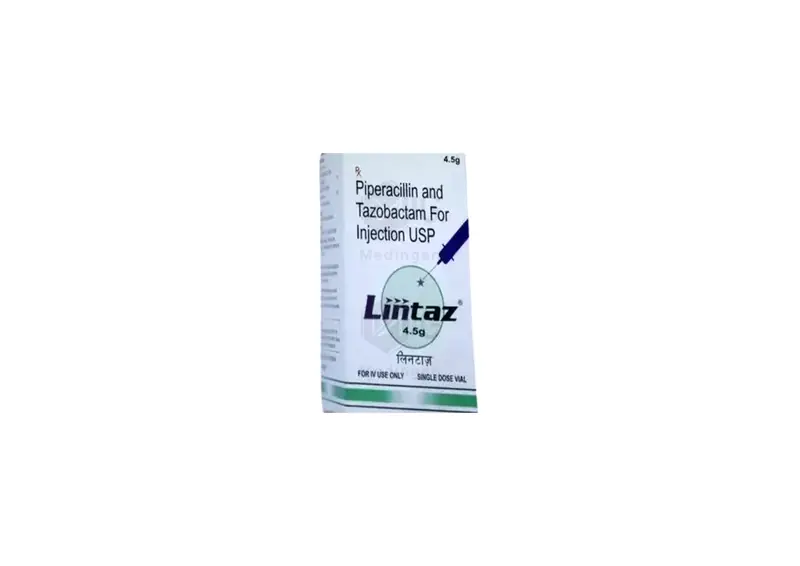
LINTAZ INJECTION 4.5GM
Product Description
LINTAZ INJECTION 4.5GM tablet is a broad-spectrum beta-lactam antibiotic + beta-lactamase inhibitor combination used to treat serious bacterial infections such as pneumonia, abdominal infections, skin and soft tissue infections, gynecological infections, urinary infections, and hospital-acquired infections. The active combination PIPERACILLIN + TAZOBACTUM works by killing bacteria through cell wall inhibition while also protecting the antibiotic from bacterial resistance enzymes. LINTAZ INJECTION 4.5GM tablet is commonly available in hospital-use strengths such as 2.25 g, 3.375 g, and 4.5 g injection equivalents, with dosing usually given every 6–8 hours depending on the infection and kidney function. It is widely used in India for severe mixed bacterial infections requiring fast IV antibiotic coverage.
Pharmacist Note
Use LINTAZ INJECTION 4.5GM tablet exactly for the full prescribed duration, even if fever improves early. Inform your doctor about any allergy to penicillin, cephalosporins, or previous severe antibiotic rash before starting treatment. Kidney function and response to therapy may need regular monitoring during use.
Uses & Benefits
Used in the treatment of bacterial infections.
Pneumonia & Lung Infections: [{product_name}] tablet is commonly used for severe pneumonia, including hospital-acquired and aspiration-related infections. Its broad-spectrum action helps cover multiple bacteria quickly while culture reports are awaited.
Abdominal & Surgical Infections: Doctors often prescribe [{product_name}] tablet for appendicitis, peritonitis, abscesses, and post-surgical abdominal infections. It helps control mixed aerobic and anaerobic bacterial infections effectively.
Skin & Soft Tissue Infections: [{product_name}] tablet is useful in diabetic foot infections, cellulitis, wound infections, and severe skin abscesses. It is especially valuable when resistant gram-negative bacteria are suspected.
Gynecological & Uterine Infections: [{product_name}] tablet may be used for pelvic inflammatory infections, postpartum uterine infections, and severe gynecological bacterial infections. It provides strong coverage against mixed organisms.
Side Effects
common:
mild:
serious:
How to Use & Safety Advice
[{"icon":"dosage","title":"Dosage","description":"The usual [{product_name}] dosage for adults is 3.375 g every 6 hours or 4.5 g every 6–8 hours depending on infection severity. Kidney disease may require lower doses or longer intervals."},{"icon":"timing","title":"Timing","description":"The usual [{product_name}] dosage for adults is 3.375 g every 6 hours or 4.5 g every 6–8 hours depending on infection severity. Kidney disease may require lower doses or longer intervals."},{"icon":"limit","title":"Limit","description":"Do not skip doses or stop [{product_name}] tablet early, even if symptoms improve. Incomplete treatment may lead to relapse or antibiotic resistance."},{"icon":"consistency","title":"Consistency","description":"Regular dosing at the prescribed interval improves bacterial killing and treatment success. The full course should always be completed as advised by the doctor."}]
[{"icon": "pregnancy", "title": "Pregnancy", "description": "[{product_name}] tablet may be used in pregnancy if clearly prescribed for serious bacterial infections. The doctor will balance the benefits of infection control against any possible risks."}, {"icon": "alcohol", "title": "Alcohol", "description": "Alcohol does not directly reduce the effect of [{product_name}] tablet, but it may worsen dehydration, stomach upset, and recovery from severe infection."}, {"icon": "driving", "title": "Driving", "description": "[{product_name}] tablet itself usually does not affect driving, but dizziness, severe infection symptoms, or weakness may reduce alertness."}, {"icon": "kidney", "title": "Kidney", "description": "[{product_name}] tablet needs dose adjustment in kidney disease because the medicine is removed through the kidneys. Monitoring creatinine and urine output is often required."}, {"icon": "elderly", "title": "Elderly", "description": "Older adults may need lower or carefully spaced [{product_name}] dosage because kidney clearance may be slower. Sodium content may also need attention in heart failure patients."}, {"icon": "children", "title": "Children", "description": "[{product_name}] tablet is widely used in children for severe infections, but the dose is carefully adjusted by body weight and infection type. Pediatric use should always be supervised."}]
Details
Benefits
Piperacillin + Tazobactam is used to treat a variety of bacterial infections, including:Lower respiratory tract infections, Urinary tract infections, Skin and soft tissue infections
How It Works
This combination includes two medicines:
- Piperacillin: An antibiotic that works by inhibiting bacterial cell wall formation, leading to bacterial death.
- Tazobactam: A beta-lactamase inhibitor that protects Piperacillin from being broken down by bacterial enzymes, enhancing its effectiveness.
Side Effects
Vomiting, Nausea, Diarrhea, Constipation, Dyspepsia (indigestion), Headache, Insomnia (difficulty sleeping)
Expert's Advice
- Purpose: Piperacillin + Tazobactam is prescribed for resistant bacterial infections.
- Administration: Take with food and plenty of fluids to minimize stomach upset.
- Complete Course: Always complete the full course, even if you feel better, to avoid resistance or recurrence.
- Diarrhea: Diarrhea is a possible side effect; probiotics can help restore gut flora. Inform your doctor if you experience bloody stools or severe abdominal cramps.
- Allergic Reactions: Seek immediate medical help if you notice an itchy rash, swelling, or breathing difficulties.
- Do Not Reuse: Avoid using leftover antibiotics for future infections. Always consult your doctor before reusing any antibiotics.
Frequently Asked Questions
Q. What is Piperacillin + Tazobactam used for?
It is used to treat bacterial infections, including lower respiratory tract infections, urinary tract infections, and skin infections.
Q. What precautions should I take while using Piperacillin + Tazobactam?
Make sure you are not allergic to Piperacillin, Tazobactam, or other penicillin-based antibiotics. Inform your doctor if you have liver or kidney disease or if you are on anticoagulant medications.
Q. Can Piperacillin + Tazobactam cause diarrhea?
Yes, diarrhea can occur. Stay hydrated, and inform your doctor if you notice blood in your stools or severe abdominal cramps.
Q. What should I do in case of an overdose?
Overdose may cause restlessness, nervousness, or seizures. Seek immediate medical attention if an overdose is suspected.
Q. Can Piperacillin + Tazobactam be used during pregnancy or breastfeeding?
Consult your doctor before use if you are pregnant, planning to conceive, or breastfeeding.
Q. Is it safe to stop taking Piperacillin + Tazobactam if I feel better?
No, stopping early can lead to antibiotic resistance or infection recurrence. Always complete the prescribed course.