
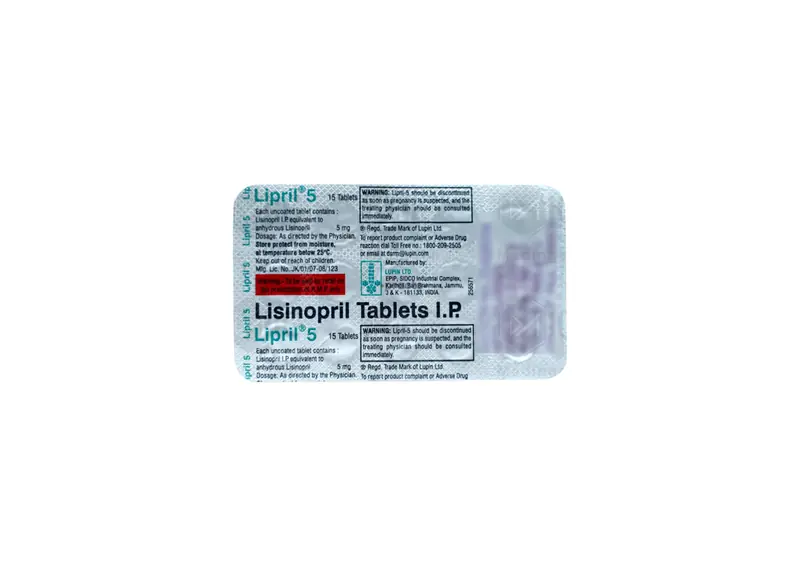
LIPRIL 5MG
Uses & Benefits
used in the treatment of Hypertension (high blood pressure), prevention of heart attack and stroke and Heart failure.
Details
Benefits
Lisinopril is used to treat:Hypertension (high blood pressure), Heart failure, Prevention of heart attack and stroke
How It Works
Lisinopril is an ACE inhibitor that relaxes blood vessels, reducing stress on the heart, allowing it to pump blood more efficiently.
Side Effects
Cough, Dizziness, Increased potassium levels in blood, Hypotension (low blood pressure), Headache
Expert's Advice
- Dizziness: Lisinopril may cause initial dizziness. Stand up slowly from sitting or lying down, and taking it at bedtime can help prevent daytime dizziness.
- Cough: If you experience a persistent dry cough, inform your doctor.
- Potassium: Avoid potassium supplements and potassium-rich foods (like bananas and broccoli) to prevent high potassium levels.
- Pregnancy: Inform your doctor if you are pregnant, planning to conceive, or breastfeeding.
- Heart and Kidney Health: This medication can lower blood pressure and may also protect kidney function, especially helpful for individuals with diabetes or mild-to-moderate kidney disease.
Frequently Asked Questions
Q. What is Lisinopril used for?
Lisinopril is used for high blood pressure, heart failure, and preventing heart attacks and strokes by reducing heart workload and relaxing blood vessels.
Q. What should I inform my doctor about before taking Lisinopril?
Inform your doctor if you have any allergies, kidney, liver, or heart conditions, diabetes, irregular blood pressure, low white blood cell counts, or if you recently experienced diarrhea or vomiting. Mention any other medications you taking.
Q. What if I develop a persistent dry cough while taking Lisinopril?
A dry cough is a common side effect. If bothersome, consult your doctor, who may recommend alternatives. Avoid stopping Lisinopril without medical advice.
Q. When is the best time to take Lisinopril?
It often recommended to take it daily at the same time. For the first dose, taking it at bedtime is advised to avoid dizziness. Follow your doctor’s directions.
Q. Can I stop taking Lisinopril if I feel better?
No, continue taking it as prescribed even if you feel well. Stopping abruptly may increase your blood pressure and health risks.
Q. Does Lisinopril affect fertility?
There no evidence it affects fertility. However, it not recommended during pregnancy, so consult your doctor if you plan to conceive.
Q. Will Lisinopril make me feel dizzy?
Yes, it can. Stand up slowly if it occurs, or sit or lie down if you feel faint. Avoid driving or using machinery until dizziness resolves.
Q. How does Lisinopril affect people with diabetes?
Lisinopril may interact with insulin or antidiabetic medicines, potentially lowering blood sugar levels. Monitor your blood glucose regularly.
Q. What lifestyle changes should I make while taking Lisinopril?
Consider reducing salt intake, managing stress, practicing yoga or meditation, avoiding alcohol, exercising regularly, and following a balanced diet for best results. Consult your doctor for personalized advice.
Q. Can Lisinopril increase potassium levels?
Yes, Lisinopril can increase potassium levels, especially if you have kidney issues, are older, or use potassium supplements. Regular blood tests are recommended to monitor potassium levels.