
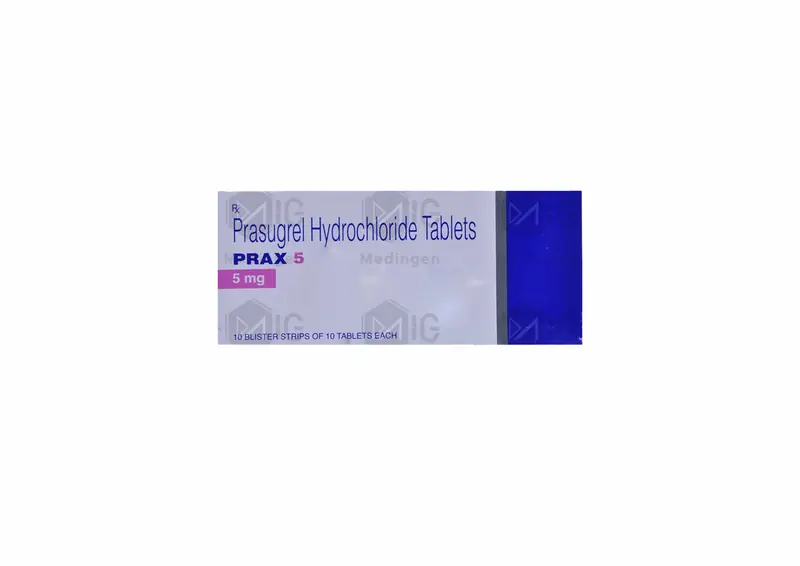
PRAX 5MG
Product Description
PRAX 5MG tablet containing PRASUGREL is an antiplatelet medicine used to reduce the risk of heart attack, stroke, and dangerous blood clot formation in patients with acute coronary syndrome or those undergoing angioplasty with stent placement. It belongs to the P2Y12 platelet inhibitor class and works by preventing platelets from sticking together and forming clots. PRAX 5MG tablet is commonly prescribed along with aspirin as part of dual antiplatelet therapy after PCI. It is available in maintenance strengths typically guided by body weight and bleeding risk. PRAX 5MG tablet dosage must be taken exactly as prescribed because missed doses may increase clot risk, while excess use may raise PRAX 5MG side effects such as serious bleeding. Long-term use helps protect heart stents and lowers recurrent cardiovascular events.
Pharmacist Note
Take PRAX 5MG tablet at the same time every day, with or without food. Do not stop it suddenly, especially after angioplasty or stent placement, unless your cardiologist advises it. Inform every doctor or dentist before procedures because this medicine can increase bleeding risk.
Uses & Benefits
used for prevention of heart attack and stroke, heart attack and unstable angina.
Prevention After Angioplasty: [{product_name}] tablet helps prevent blood clots from forming inside heart stents after angioplasty. This lowers the risk of repeat heart attack and improves long-term stent success when used regularly with aspirin.
Acute Coronary Syndrome Protection: [{product_name}] tablet is used in patients with severe chest pain or recent heart attack to reduce future clot-related complications. It provides strong platelet inhibition and helps protect the heart from further artery blockage.
Stroke and Heart Attack Risk Reduction: By preventing platelet clumping, [{product_name}] tablet reduces the chance of another clot causing a heart attack or ischemic stroke. It is especially useful in high-risk cardiac patients after PCI.
Long-term Stent Safety: [{product_name}] tablet supports long-term blood flow through treated coronary arteries. Consistent use reduces the chance of stent thrombosis, which can be life-threatening.
Side Effects
common:
moderate:
serious:
How to Use & Safety Advice
[{"icon":"dosage","title":"Dosage","description":"[{product_name}] tablet dosage is decided by the cardiologist. It usually starts with a loading dose followed by a once-daily maintenance dose, sometimes lower in low-body-weight patients."},{"icon":"timing","title":"Timing","description":"Take [{product_name}] tablet once daily at the same time, with or without food. Swallow it whole and avoid crushing unless specifically advised."},{"icon":"limit","title":"Limit","description":"Do not exceed the prescribed [{product_name}] dosage because it may sharply increase bleeding risk. Never combine it with painkillers like ibuprofen without medical advice."},{"icon":"consistency","title":"Consistency","description":"Regular daily use is essential because missing doses can increase the risk of clotting inside the stent. Continue it for the full doctor-recommended duration."}]
[{"icon": "pregnancy", "title": "Pregnancy", "description": "[{product_name}] tablet should only be used in pregnancy if clearly prescribed by a specialist. The bleeding risk for mother and baby must be carefully assessed."}, {"icon": "alcohol", "title": "Alcohol", "description": "Alcohol may further increase stomach irritation and bleeding risk with [{product_name}] tablet. Limit or avoid alcohol unless your doctor approves."}, {"icon": "driving", "title": "Driving", "description": "[{product_name}] tablet usually does not directly affect alertness, but dizziness or weakness from bleeding may impair driving. Avoid driving if you feel faint."}, {"icon": "kidney", "title": "Kidney", "description": "Patients with kidney disease need closer monitoring because bleeding risk may be higher. Dose planning may be individualized in severe renal issues."}, {"icon": "elderly", "title": "Elderly", "description": "[{product_name}] tablet is generally used cautiously in people above 75 years due to a higher bleeding risk. The cardiologist may prefer an alternative in some elderly patients."}, {"icon": "children", "title": "Children", "description": "[{product_name}] tablet is not routinely recommended in children as safety and efficacy are not well established."}]