
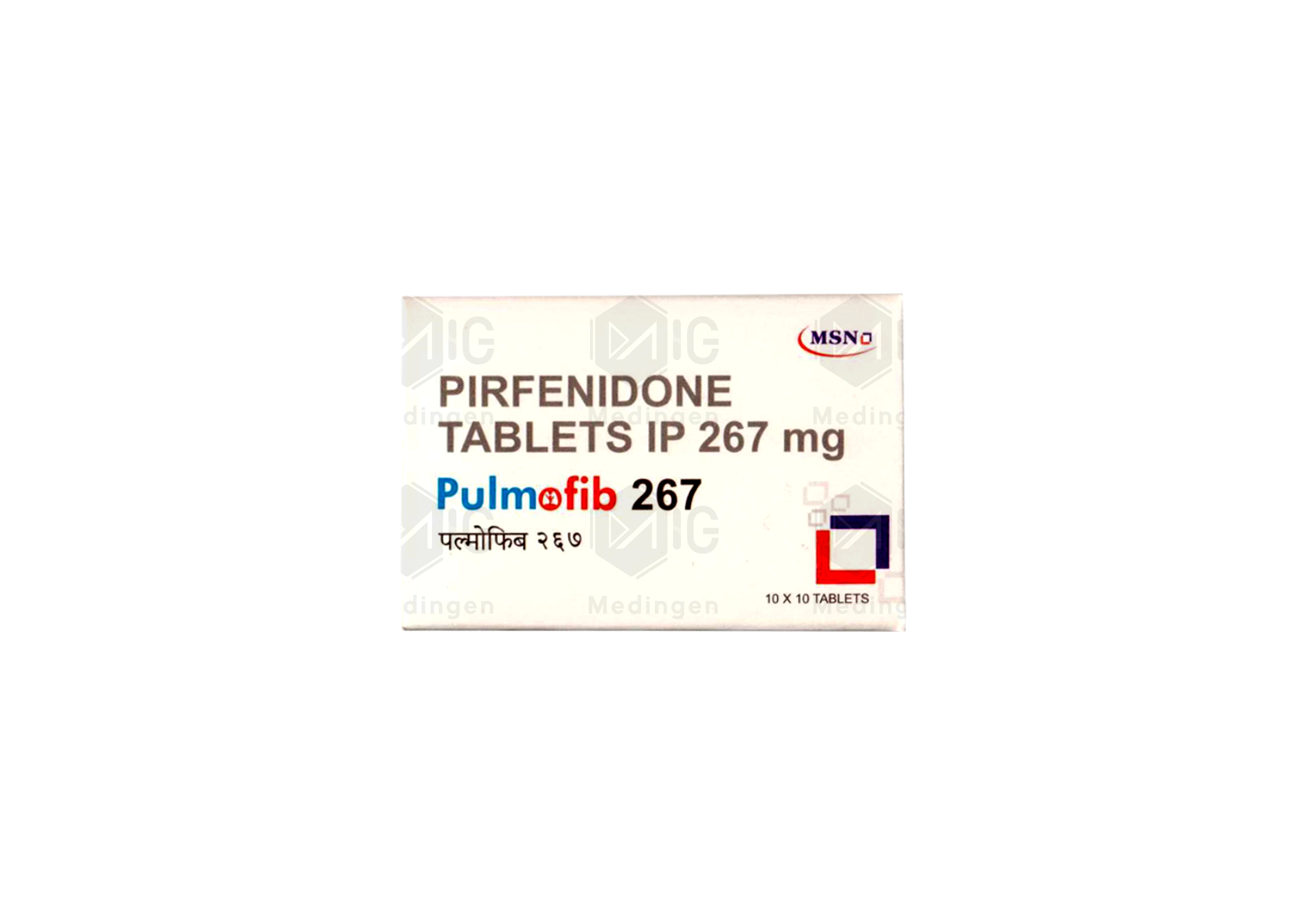
PULMOFIB 267MG
Product Description
PULMOFIB 267MG tablet is a prescription antifibrotic medicine used to treat idiopathic pulmonary fibrosis (IPF), a chronic lung disease that causes progressive scarring and stiffness of lung tissue. It belongs to the pyridone antifibrotic drug class and helps slow the worsening of breathing difficulty over time. The active ingredient PIRFENIDONE works by reducing fibrosis-causing signals, inflammation, and abnormal scar tissue formation in the lungs, which may help preserve lung function. PULMOFIB 267MG tablet is commonly available in 267 mg, 534 mg, and 801 mg strengths, with gradual dose escalation over 2 weeks before reaching maintenance therapy. It is widely used for long-term IPF management under pulmonologist supervision.
Pharmacist Note
Take PULMOFIB 267MG tablet with food three times daily and at the same times every day to reduce stomach upset and improve tolerance. Avoid smoking because it may reduce how well the medicine works. Use SPF 50+ sunscreen, sunglasses, and protective clothing because sunlight sensitivity is a known PULMOFIB 267MG side effect.
Uses & Benefits
Used in the treatment of idiopathic pulmonary fibrosis.
Idiopathic Pulmonary Fibrosis (IPF): [{product_name}] tablet is mainly used to slow lung scarring in adults with IPF. Regular use helps reduce the decline in lung capacity and may support better long-term breathing stability.
Slows Disease Progression: Doctors prescribe [{product_name}] tablet to reduce the speed at which fibrosis worsens over months and years. While it does not cure IPF, it may help preserve daily activity tolerance and quality of life for longer.
Supports Lung Function Preservation: [{product_name}] tablet may help slow the fall in forced vital capacity (FVC), an important lung function measure. This can help patients maintain walking ability and reduce rapid symptom worsening.
[{product_name}] tablet may help slow the fall in forced vital capacity (FVC), an important lung function measure. This can help patients maintain walking ability and reduce rapid symptom worsening.: [{product_name}] tablet is often part of long-term IPF management along with pulmonary rehabilitation, vaccinations, oxygen therapy, and smoking cessation support. Consistent use can improve disease-control strategy.
Side Effects
common:
mild:
serious:
How to Use & Safety Advice
[{"icon":"dosage","title":"Dosage","description":"The usual [{product_name}] dosage is increased gradually over 14 days: 267 mg three times daily for 7 days, then 534 mg three times daily for 7 days, followed by 801 mg three times daily maintenance. The maximum usual daily dose is 2403 mg/day."},{"icon":"timing","title":"Timing","description":"Take [{product_name}] tablet with food, morning, afternoon, and evening, at evenly spaced intervals. Taking it with meals helps reduce nausea and improves stomach tolerance."},{"icon":"limit","title":"Limit","description":"Do not exceed the prescribed [{product_name}] dosage. If you miss treatment for 14 days or more, the dose often needs to be restarted at a lower level and slowly increased again."},{"icon":"consistency","title":"Consistency","description":"Regular daily use is essential because [{product_name}] tablet works gradually to slow fibrosis progression. Missing repeated doses may reduce long-term lung protection."}]
[{"icon": "pregnancy", "title": "Pregnancy", "description": "[{product_name}] tablet should be used during pregnancy only if clearly prescribed by a specialist. The expected lung benefits must be balanced against possible fetal risks."}, {"icon": "alcohol", "title": "Alcohol", "description": "Limit alcohol while taking [{product_name}] tablet because both alcohol and the medicine can affect the liver. Regular liver function tests may be advised."}, {"icon": "driving", "title": "Driving", "description": "[{product_name}] tablet may cause dizziness or tiredness in some patients. Avoid driving until you know how it affects your alertness."}, {"icon": "kidney", "title": "Kidney", "description": "[{product_name}] tablet should be used carefully in kidney disease, especially severe impairment. Dose decisions depend on renal function and overall tolerance."}, {"icon": "elderly", "title": "Elderly", "description": "Older adults commonly use [{product_name}] tablet for IPF, but appetite loss, weight loss, and sunlight sensitivity may need closer monitoring."}, {"icon": "children", "title": "Children", "description": "[{product_name}] tablet is generally not recommended in children, as safety and effectiveness are not well established."}]
Details
Benefits
Pirfenidone is used in the treatment of idiopathic pulmonary fibrosis (IPF), a condition characterized by scarring and stiffness in the lungs, making it difficult to breathe.
How Pirfenidone Works
Pirfenidone is an antifibrotic medication. It reduces fibrosis (scarring) and swelling in the lungs, improving breathing and slowing the progression of IPF.
Side Effects
Headache, Dizziness, Insomnia (difficulty sleeping), Loss of appetite, Weight loss, Upper respiratory tract infection, Sinus inflammation, Tiredness
Expert's Advice
- With Food: Take Pirfenidone with food at the same time each day.
- Sun Sensitivity: Avoid excessive sun exposure, as Pirfenidone can increase skin sensitivity to sunlight. Use sunscreen and wear protective clothing when outdoors.
- Smoking: Avoid smoking, as it can reduce the effectiveness of Pirfenidone.
- Dizziness/Sleepiness: It may cause dizziness or drowsiness; avoid driving or operating heavy machinery until you know how it affects you.
- Monitor Weight: Track your weight regularly, as Pirfenidone may cause weight loss.
- Liver Function: Your doctor may conduct regular liver function tests. Seek medical advice if you experience abdominal pain, loss of appetite, dark urine, or yellowing of the skin or eyes (signs of jaundice).
Frequently Asked Questions
Q. Is Pirfenidone a steroid?
No, Pirfenidone is not a steroid. It belongs to a group of medicines called pyridines and is used specifically for idiopathic pulmonary fibrosis (IPF), a progressive lung disease.
Q. What are the side effects of Pirfenidone?
Common side effects include skin sensitivity to sunlight, nausea, tiredness, diarrhea, headache, and respiratory infections. Some may also experience indigestion, loss of appetite, difficulty sleeping, dizziness, or sleepiness.
Q. What monitoring will I need during treatment with Pirfenidone?
Your doctor will monitor liver function before and during treatment, with tests monthly for the first six months and every three months afterward. Lung function will also be regularly checked to assess the response to treatment.
Q. Why is it important to continue treatment with Pirfenidone?
Pirfenidone helps slow lung scarring, which cannot be reversed. Continuing treatment helps preserve lung function as much as possible.
Q. If my disease is stable, can I stop Pirfenidone?
No, IPF is a progressive disease, and stopping Pirfenidone may lead to further progression. Always consult your doctor before discontinuing the medication.
Q. What should I avoid while taking Pirfenidone?
Avoid excessive sun exposure and smoking. Use sunscreen, cover up when outdoors, and avoid tobacco, as smoking can reduce the effectiveness of the treatment.