
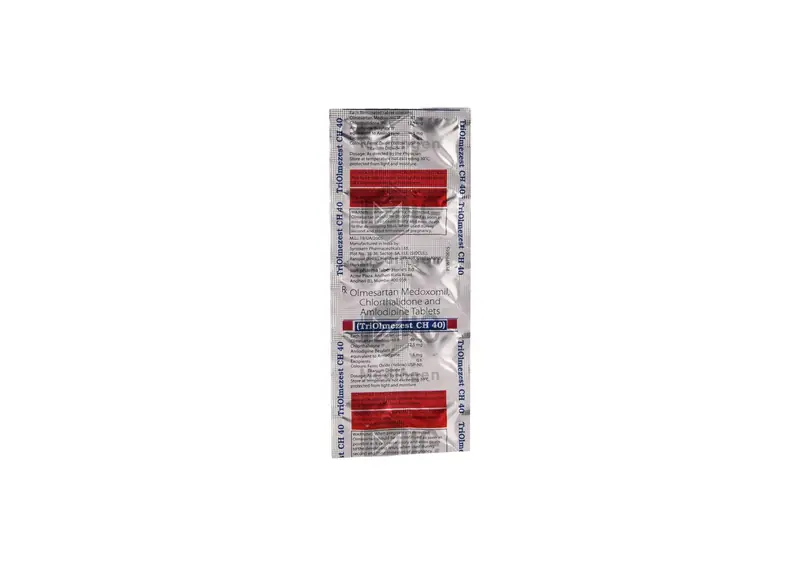
TRIOLMEZEST CH 40
Product Description
TRIOLMEZEST CH 40 tablet is a triple-combination antihypertensive medicine containing OLMESARTAN MEDOXOMIL + AMLODIPINE + CHLORTHALIDONE, used to treat high blood pressure (hypertension) when two medicines alone are not enough. It belongs to the angiotensin receptor blocker + calcium channel blocker + thiazide-like diuretic class. This combination lowers blood pressure through three complementary mechanisms—relaxing blood vessels, reducing vascular resistance, and removing excess fluid from the body. TRIOLMEZEST CH 40 tablet helps reduce the long-term risk of stroke, heart attack, kidney damage, and heart failure. It is commonly available in strengths such as 20 mg/5 mg/12.5 mg and 40 mg/5 mg/12.5 mg, depending on treatment needs and BP severity.
Pharmacist Note
Take TRIOLMEZEST CH 40 tablet at the same time every day, preferably in the morning, because the diuretic component may increase urination. Stay well hydrated unless your doctor has advised fluid restriction. Monitor blood pressure regularly and avoid suddenly stopping the medicine even if readings improve.
Uses & Benefits
used to treat hypertension (high blood pressure) and reduce the risk of heart attack or stroke in adults.
High Blood Pressure Management: [{product_name}] tablet is primarily used to control moderate to severe hypertension in adults. It combines three proven blood pressure medicines into one tablet, making BP reduction stronger and more sustained across 24 hours.
Reduced Cardiovascular Risk: By lowering blood pressure effectively, [{product_name}] tablet helps reduce the risk of stroke, heart attack, heart failure, and long-term blood vessel damage. This is especially beneficial in patients with multiple cardiovascular risk factors.
Fluid Reduction and Swelling Control: The diuretic component in [{product_name}] tablet helps remove excess salt and water through urine. This can improve blood pressure control and may also reduce swelling in some patients.
Improved Treatment Adherence: Using one combined tablet instead of multiple separate medicines makes the treatment plan simpler. This improves daily compliance and reduces the chance of missed doses.
Side Effects
common:
metabolic:
blood_pressure_related:
serious:
How to Use & Safety Advice
[{"icon":"dosage","title":"Dosage","description":"The [{product_name}] dosage is selected based on your blood pressure readings, kidney function, and previous response to BP medicines. Your doctor may adjust the strength gradually for better control and tolerability."},{"icon":"timing","title":"Timing","description":"Take [{product_name}] tablet once daily, preferably in the morning, with or without food. Morning use is often preferred to reduce sleep disturbance from nighttime urination."},{"icon":"limit","title":"Limit","description":"Do not take more than the prescribed [{product_name}] dosage. Overuse may cause excessive urination, dehydration, low potassium, dizziness, or dangerously low blood pressure."},{"icon":"consistency","title":"Consistency","description":"Take [{product_name}] tablet regularly at the same time every day for best results. Consistent dosing helps maintain stable blood pressure protection throughout the day and night."}]
[{"icon": "pregnancy", "title": "Pregnancy", "description": "[{product_name}] tablet should generally be avoided during pregnancy, especially after the first trimester. It may harm the developing baby, so inform your doctor immediately if pregnancy is suspected."}, {"icon": "alcohol", "title": "Alcohol", "description": "Alcohol can increase dizziness and enhance the blood pressure-lowering effect of [{product_name}] tablet. Limit intake, especially when beginning treatment."}, {"icon": "driving", "title": "Driving", "description": "[{product_name}] tablet may cause dizziness, tiredness, or lightheadedness in some people. Avoid driving until you know how the medicine affects you."}, {"icon": "kidney", "title": "Kidney", "description": "Kidney function and electrolyte levels should be monitored while taking [{product_name}] tablet. The diuretic component may affect sodium, potassium, and creatinine levels."}, {"icon": "elderly", "title": "Elderly", "description": "Older adults may be more sensitive to dehydration and sudden BP drops. Lower starting strengths and closer monitoring are often recommended."}, {"icon": "children", "title": "Children", "description": "[{product_name}] tablet is usually not recommended for children unless prescribed by a specialist. Dosing and safety depend on age and body weight."}]
Details
Benefits
Effective Blood Pressure Control: Offers triple-action efficacy to manage high blood pressure through complementary mechanisms. Heart Protection: Reduces the risk of cardiovascular complications, including heart attack and stroke. Kidney Health: Protects kidneys, especially in hypertensive patients with pre-existing kidney conditions. Fluid Retention Management: The diuretic component (Chlorthalidone) reduces excess fluid, relieving swelling and bloating.Improved Blood Circulation: Relaxes and widens blood vessels, improving blood flow and reducing strain on the heart.
How It Works
Olmesartan Medoxomil:
- An angiotensin receptor blocker (ARB) that blocks the action of angiotensin II, a hormone that causes blood vessels to constrict. This leads to relaxed blood vessels and lower blood pressure.
Amlodipine:
- A calcium channel blocker (CCB) that prevents calcium from entering vascular smooth muscle cells. This relaxes blood vessels, improving blood flow and reducing blood pressure.
Chlorthalidone:
- A diuretic (water pill) that increases urine output, helping eliminate excess salt and water, thereby reducing blood volume and lowering blood pressure.
Combined Effect:
The combination works through distinct pathways to provide comprehensive blood pressure management and cardiovascular protection.
Side Effects
Dizziness or lightheadedness: Fatigue, Nausea, Headache, Swelling in the ankles (edema, due to Amlodipine), Increased urination (from Chlorthalidone)
Expert's Advice
Dosage and Administration:
- Take the medication as prescribed, usually once daily, at the same time each day.
- It can be taken with or without food.
Hydration:
- Stay hydrated to prevent dehydration from the diuretic effect, but avoid excessive salt intake.
Monitor Symptoms:
- Regularly check your blood pressure and kidney function. Periodic blood tests may be required to monitor potassium levels.
Alcohol:
- Limit alcohol consumption as it can increase the risk of dizziness and low blood pressure.
Pregnancy and Breastfeeding:
- Not recommended during pregnancy or breastfeeding due to potential risks to the fetus or infant.
Lifestyle Adjustments:
- Adopt a healthy, low-sodium diet, exercise regularly, and avoid smoking to optimize the medication's benefits.
Avoid Abrupt Discontinuation:
- Do not stop taking the medication suddenly, as it may cause a rebound rise in blood pressure.
Frequently Asked Questions
Q: What is this combination used for?
It is used to treat high blood pressure (hypertension) and reduce the risk of heart attack, stroke, and other cardiovascular events.
Q: How long does it take to show results?
Blood pressure may start to decrease within 2 weeks, but full benefits are typically observed after 4–8 weeks of consistent use.
Q: Can I stop taking the medication once my blood pressure normalizes?
No, continue taking the medication as prescribed. Stopping it abruptly may cause your blood pressure to rise again.
Q: Can this medication cause weight changes?
It may cause mild weight loss due to fluid loss from the diuretic component but does not typically cause weight gain.
Q: What should I do if I miss a dose?
Take the missed dose as soon as you remember. If it's close to the next dose, skip the missed one. Do not double up on doses.
Q: Are there any dietary restrictions?
Yes, reduce salt intake and eat a balanced diet rich in fruits, vegetables, and whole grains.
Q: Can I drive after taking this medication?
Avoid driving or operating heavy machinery if you feel dizzy, lightheaded, or fatigued.
Q: Can it cause potassium imbalances?
Yes, Chlorthalidone may lower potassium levels. Your doctor may recommend potassium supplements or dietary adjustments to prevent deficiencies.