
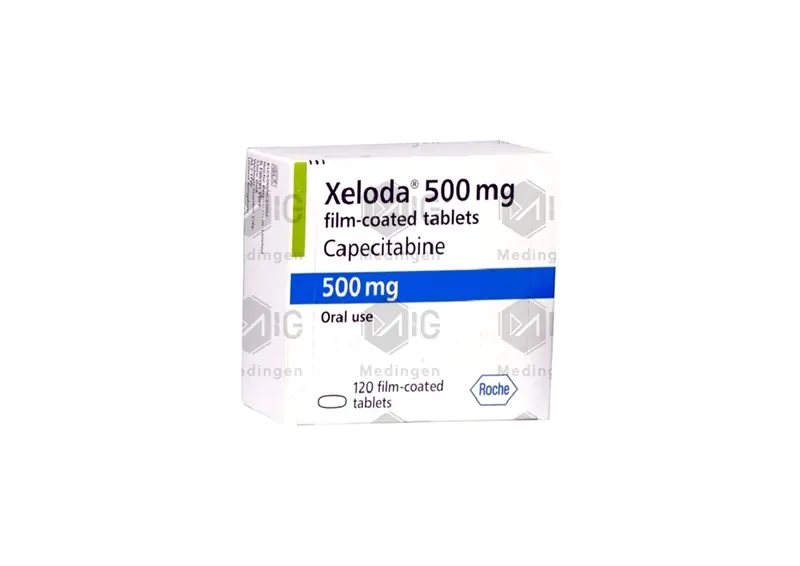
XELODA 500MG
Uses & Benefits
used in the treatment of cancer of colon and rectum and breast cancer.
Details
Benefits
Capecitabine is used to treat cancers of the colon, rectum, and breast. It may be administered on its own or in combination with other cancer-fighting drugs.
How It Works
Capecitabine is a chemotherapy medication that, once in the body, is converted into 5-fluorouracil (5-FU). 5-FU disrupts DNA and RNA synthesis in cancer cells, slowing or stopping their growth and causing them to die.
Side Effects
Fatigue, Vomiting, High bilirubin levels, Abdominal pain, Diarrhea, Paresthesia (tingling or prickling), Weight loss, Stomatitis (mouth sores), Hair loss, Dehydration, Constipation, Eye irritation, Nausea, Anemia (low red blood cell count), Hand-foot syndrome (redness and swelling in hands and feet), Fever, Pain, Breathlessness, Low platelet count, Decreased appetite, Decreased white blood cells (neutropenia), Swelling (edema)
Expert's Advice
- Take after Meals: Capecitabine should be taken within 30 minutes after eating.
- Complete the Course: Follow your doctorâs instructions and avoid skipping doses.
- Avoid Driving if Fatigued: Fatigue or dizziness is common; be cautious with tasks that require focus.
- Use Birth Control: Women should use birth control during treatment and for six months after, and men should use it for three months after.
- Monitor Bleeding: Capecitabine may interact with blood thinners like warfarin, raising bleeding risks.
- Report Infections or Severe Symptoms: Seek medical advice if you experience fever, sore throat, unusual bruising, or severe diarrhea.
- Regular Blood Tests: Frequent monitoring of blood cell counts, liver, and kidney function is often necessary.
Frequently Asked Questions
Q. Do I need birth control while using Capecitabine?
Yes, effective birth control is recommended to prevent harm to an unborn child. Women should use birth control for six months post-treatment, and men for three months.
Q. How long do I need to take Capecitabine?
Treatment typically follows a 21-day cycle, with Capecitabine taken for 14 days, followed by a 7-day rest period. The duration of cycles depends on the treatment plan.
Q. What are the side effects of Capecitabine?
Common side effects include nausea, vomiting, diarrhea, fatigue, and hair loss. Severe side effects may include infection, severe diarrhea, and unusual bleeding.
Q. Does Capecitabine cause fatigue?
Yes, fatigue is a common side effect, and it may affect your ability to drive or operate machinery safely.
Q. What is the most important information to know about Capecitabine?
Capecitabine may increase bleeding risk, especially when taken with blood thinners. Watch for unusual bleeding, black stools, or blood in urine and seek medical help if these symptoms occur.
Q. What type of drug is Capecitabine?
Capecitabine is an âantimetaboliteâ chemotherapy drug that interferes with DNA synthesis, which disrupts the growth of cancer cells.
Q. Do I need tests while on Capecitabine?
Yes, regular blood tests are necessary to monitor blood cell counts and liver and kidney function.
Q. What are serious side effects of Capecitabine?
Serious side effects include severe diarrhea, mouth sores, hand-foot syndrome, infection symptoms, chest pain, yellowing of the skin or eyes, and rapid heartbeat. Notify your doctor immediately if these occur.