01
What are the common CLOPIVAS AP 150MG tablet uses?
The common CLOPIVAS AP 150MG tablet uses include heart attack prevention, post-stent care, unstable angina, stroke prevention, and TIA recurrence prevention. It is mainly used for secondary cardiovascular protection.
02
Can CLOPIVAS AP 150MG tablet cause bleeding?
Yes, bleeding is the most important CLOPIVAS AP 150MG side effect. Nosebleeds, easy bruising, black stools, vomiting blood, or blood in urine need urgent medical attention.
03
Can I stop CLOPIVAS AP 150MG tablet once I feel better?
No, CLOPIVAS AP 150MG tablet should never be stopped on your own, especially after a recent stent or heart attack. Stopping suddenly may lead to stent thrombosis, heart attack, or stroke.
04
How long do CLOPIVAS AP 150MG tablet uses continue?
CLOPIVAS AP 150MG tablet uses commonly continue for 1 month to 12 months or longer, depending on whether it was prescribed after stent placement, stroke, or acute coronary syndrome. Your specialist decides the duration.
05
Can I take painkillers with CLOPIVAS AP 150MG tablet?
Avoid self-medicating with ibuprofen, diclofenac, or other NSAIDs during CLOPIVAS AP 150MG tablet use because they increase ulcer and bleeding risk. Always ask your doctor for a safer pain-relief option.
06
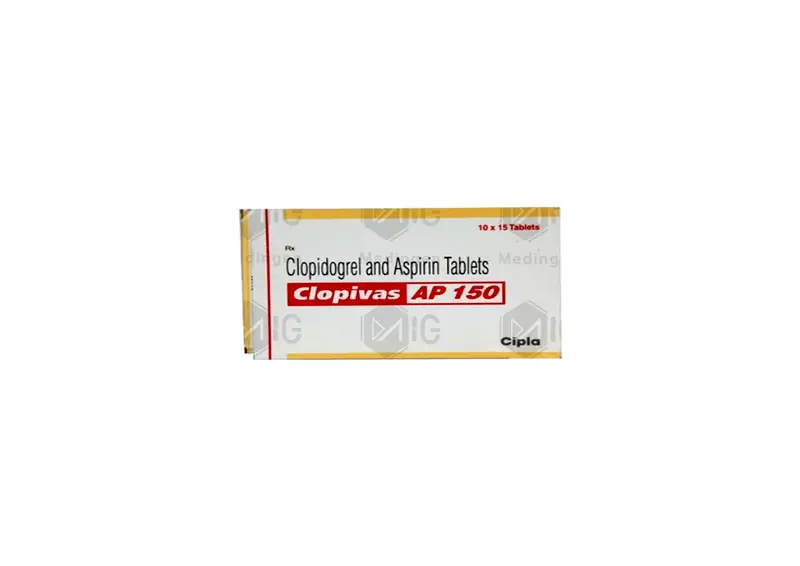
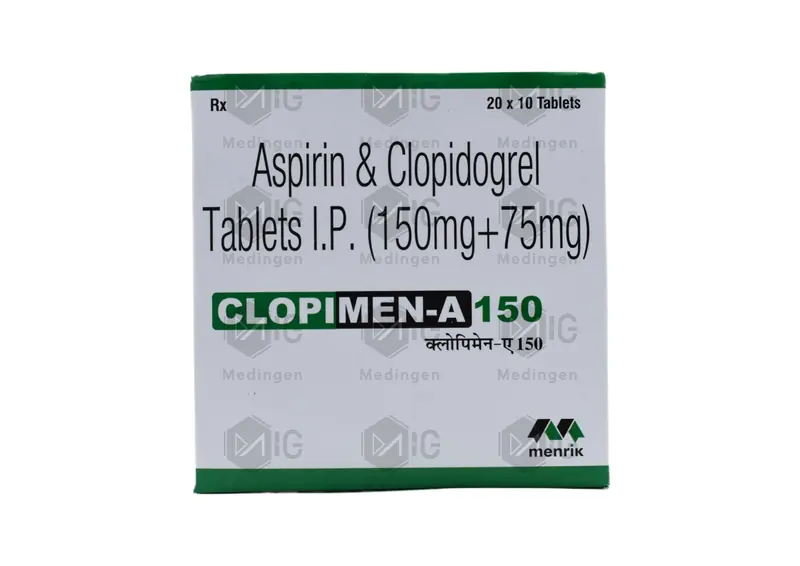
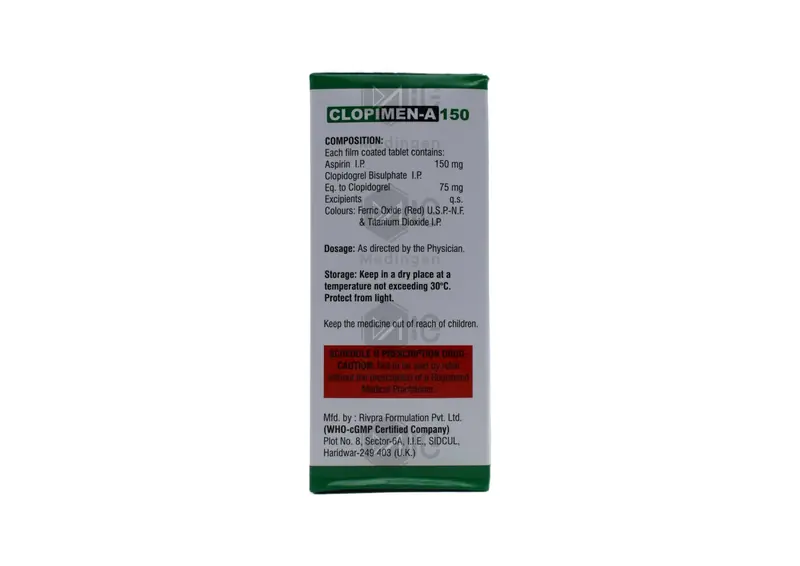
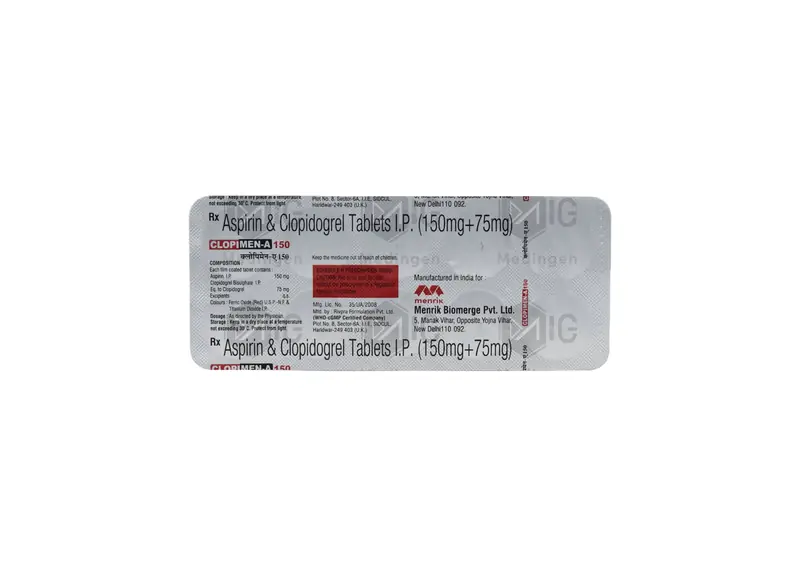
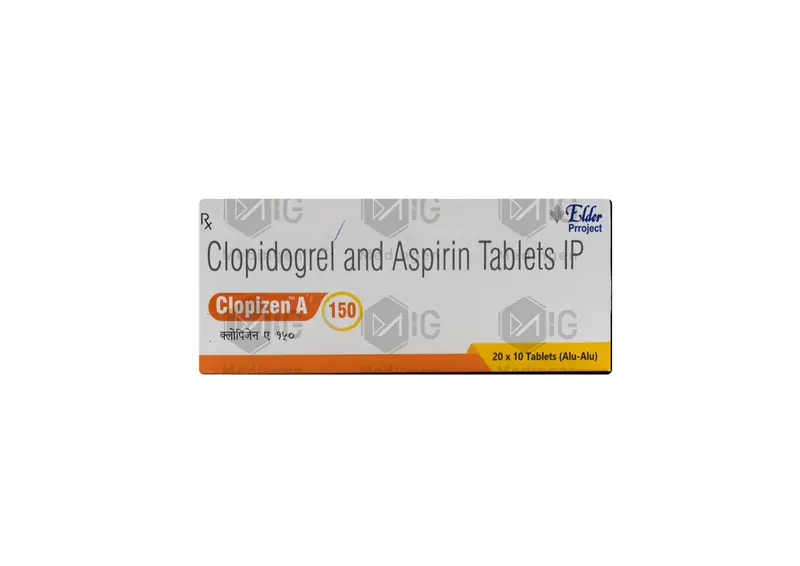
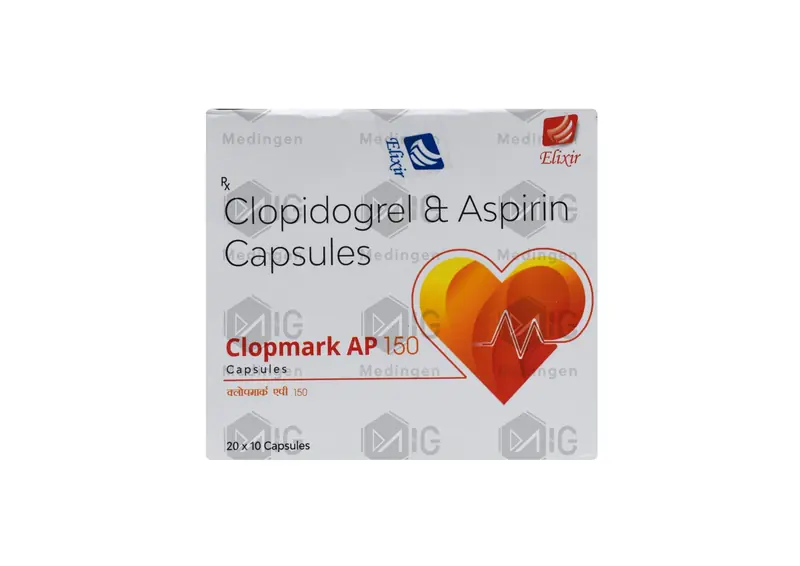
Are CLOPIVAS AP 150MG and CLOPIMEN A 150 the same?
Yes, CLOPIVAS AP 150MG and CLOPIMEN A 150 contain the same active salt (ASPIRIN 75MG+ CLOPIDOGREL 150MG) in the same strength and provide identical therapeutic efficacy, meeting strict quality and safety standards.




 Pharmacist Note









.jpg)
.jpg)


