01
What are the main TRIVOLIB 1MG tablet uses?
The main TRIVOLIB 1MG tablet uses include controlling type 2 diabetes when dual therapy is not enough, especially in patients with high post-meal sugar spikes. It is useful for both fasting and after-meal glucose control.
02
Can TRIVOLIB 1MG tablet cause low blood sugar?
Yes, one of the important TRIVOLIB 1MG side effects is hypoglycemia, especially if meals are skipped, delayed, or after heavy exercise. Always keep a quick sugar source with you and monitor blood glucose regularly.
03
Can TRIVOLIB 1MG tablet cause gas or bloating?
Yes, bloating, flatulence, constipation, and abdominal discomfort are known TRIVOLIB 1MG side effects due to the voglibose and metformin components. Taking it with food and following the prescribed TRIVOLIB 1MG dosage usually improves tolerance.
04
What should I do if I miss a dose of TRIVOLIB 1MG tablet?
Take the missed dose with food as soon as you remember on the same day. If it is close to the next TRIVOLIB 1MG dosage time, skip the missed dose and continue normally without doubling.
05
How long should I continue TRIVOLIB 1MG tablet uses?
TRIVOLIB 1MG tablet uses are usually long-term because type 2 diabetes needs continuous management. Your doctor may continue or adjust treatment depending on HbA1c, post-meal sugar trends, and kidney function.
06
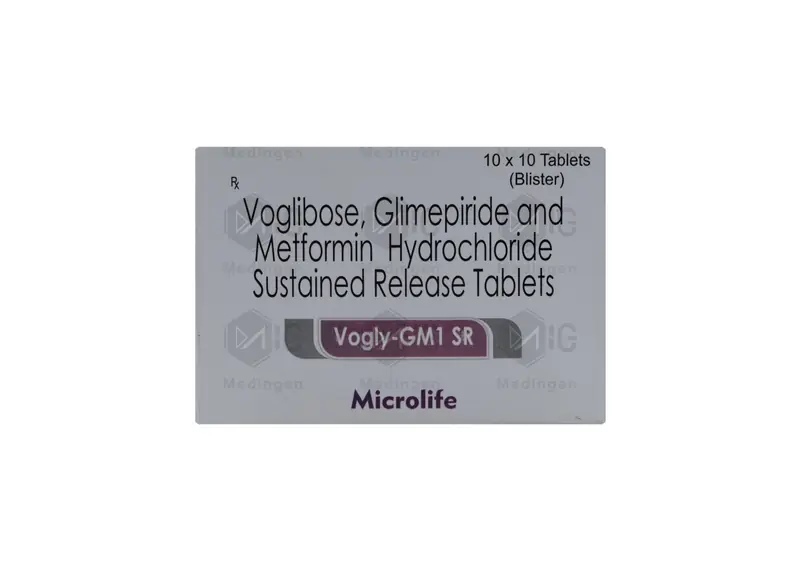
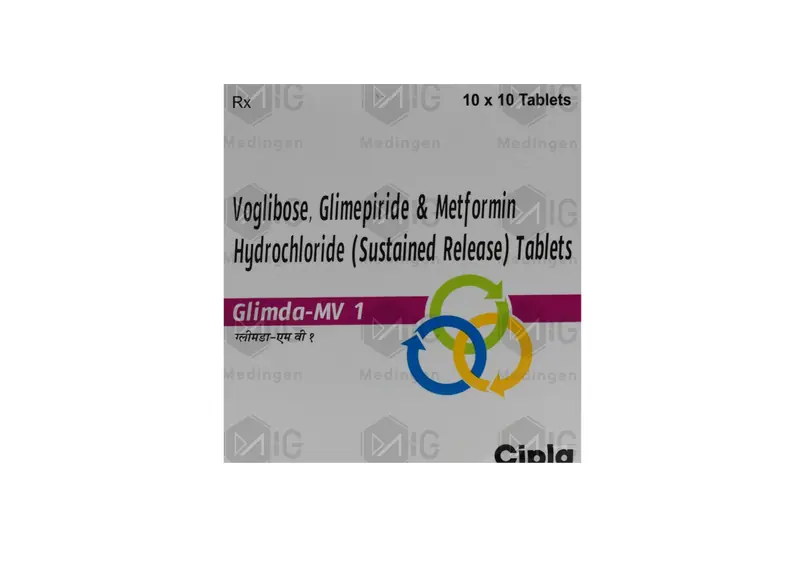
Are TRIVOLIB 1MG and GLIMIHEM MV1 the same?
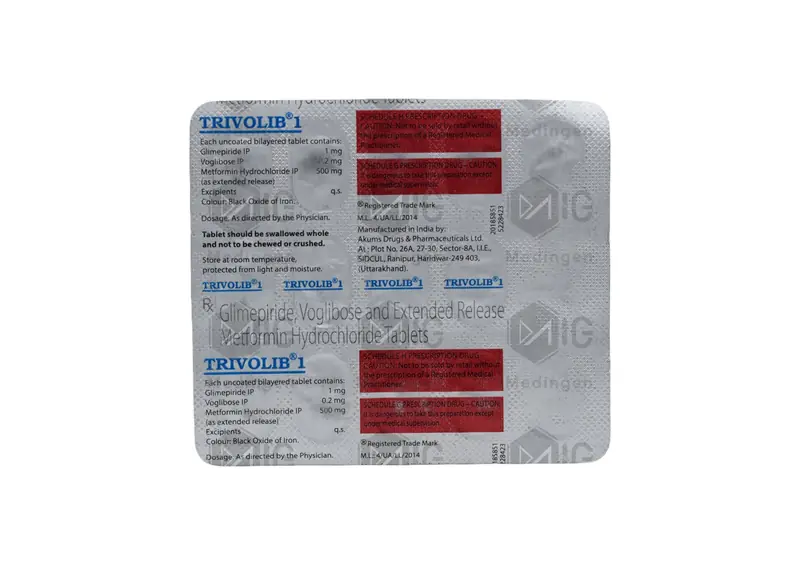
Yes, TRIVOLIB 1MG and GLIMIHEM MV1 contain the same active salt (GLIMEPIRIDE 1MG + METFORMIN 500MG + VOGLIBOSE 0.2MG) in the same strength and provide identical therapeutic efficacy, meeting strict quality and safety standards.







 Pharmacist Note









.jpg)
.jpg)